

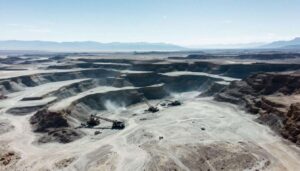


Africa holds approximately 30 per cent of the world’s mineral resources, yet the nations blessed with these riches struggle to transform their geological fortune into tangible prosperity for their citizens. The continent’s abundant reserves of gold, copper, cobalt and other critical minerals should theoretically position these countries as economic powerhouses. However, structural inequalities, unfavourable contractual arrangements and limited bargaining power have created a situation where the wealth flows outward whilst poverty persists within. Understanding why this paradox exists requires examining the complex web of relationships between governments, multinational corporations and international markets.
Mineral wealth and power imbalances
The structural disadvantage facing African governments
The relationship between mineral-rich African nations and foreign mining corporations remains fundamentally unequal. Governments often find themselves in a weak negotiating position when attempting to secure favourable terms for resource extraction. This imbalance stems from several interconnected factors:
- Limited technical expertise to evaluate geological prospects and fair market valuations
- Pressure to attract foreign investment in competitive global markets
- Lack of capital to develop mining infrastructure independently
- Political instability that reduces long-term planning capabilities
Fiscal incentives that undermine revenue potential
To attract international investment, African governments frequently offer generous tax breaks and royalty reductions that significantly diminish potential revenue streams. Research indicates these fiscal incentives rarely deliver the promised economic benefits. Multinational corporations leverage their superior negotiating position to secure arrangements that prioritise shareholder returns over host nation development. The result is a system where resource extraction generates substantial profits for foreign entities whilst contributing minimally to local treasuries.
| Revenue Component | Typical Rate in Africa | International Benchmark |
|---|---|---|
| Corporate Tax | 25-30% | 30-35% |
| Royalty Rates | 3-5% | 5-8% |
| Production Sharing | 10-15% | 20-30% |
These disparities in contractual terms reflect the broader power dynamics that characterise the extractive industries across the continent. The African Union’s African Mining Vision seeks to address these imbalances through comprehensive reforms, yet implementation remains inconsistent across member states.
The Malian mining code: a case study
Export blockages and sovereignty assertions
The Malian government’s decision to block exports from the Loulo-Gounkoto gold mine operated by a Canadian corporation exemplifies the tensions inherent in mineral governance. This facility, which had recently resumed operations following an extended shutdown, became the focal point of disputes over revenue distribution and regulatory compliance. The government’s action demonstrated a willingness to exercise sovereignty over natural resources, even at the risk of disrupting production and potentially deterring future investment.
Renegotiating mining agreements
Mali’s approach reflects a broader trend across Africa where governments are revisiting legacy mining codes that were negotiated during periods of economic vulnerability. Key objectives of these renegotiations include:
- Increasing state participation in mining operations
- Raising royalty rates to reflect current commodity prices
- Requiring local processing of minerals before export
- Strengthening environmental and social safeguards
Whilst these efforts signal greater assertiveness from African governments, they also introduce uncertainty that mining companies cite as investment risks. The challenge lies in balancing legitimate sovereignty claims with the need to maintain a stable regulatory environment that encourages responsible development. This delicate equilibrium becomes even more critical when considering the broader context of resource sovereignty movements across the continent.
Increased sovereignty over resources
Legislative reforms across the continent
Numerous African nations have undertaken comprehensive revisions of their mining legislation to secure greater control over natural resources. These reforms typically aim to increase government equity stakes, enhance transparency requirements and ensure that extraction activities contribute meaningfully to national development priorities. Countries including Tanzania, Zambia and the Democratic Republic of Congo have all implemented significant changes to their regulatory frameworks.
Challenges in implementation
Despite progressive legislation, enforcement remains problematic. Weak institutional capacity, corruption and the sophisticated legal strategies employed by multinational corporations often undermine regulatory intentions. Additionally, the threat of international arbitration discourages governments from taking actions that might be interpreted as contract violations, even when those contracts were negotiated under questionable circumstances.
The push for increased sovereignty must also contend with practical realities. Many African nations lack the technical expertise and financial resources to operate large-scale mining ventures independently, creating continued dependence on foreign partnerships. However, the growing emphasis on resource nationalism reflects a fundamental shift in how these countries view their relationship with extractive industries and sets the stage for examining the financial returns currently being realised.
Unfavourable incomes from natural resources
The revenue gap
Africa’s exports of transition metals reached approximately $29 billion, yet this figure represents only a fraction of the total value generated throughout the supply chain. The continent remains positioned at the extraction and primary processing stages, which capture the smallest share of overall value. Downstream activities such as refining, manufacturing and technology production occur elsewhere, depriving African economies of substantial revenue opportunities.
Taxation and transfer pricing concerns
Beyond unfavourable contract terms, African governments lose significant revenue through transfer pricing manipulation and tax avoidance strategies. Mining companies often structure their operations to shift profits to low-tax jurisdictions, reducing the taxable income reported in resource-rich countries. Key mechanisms include:
- Inflated costs for services provided by related entities
- Undervaluation of mineral exports
- Excessive debt financing to generate tax-deductible interest payments
- Exploitation of treaty shopping opportunities
These practices, whilst often technically legal, undermine the spirit of revenue-sharing arrangements and deprive governments of funds needed for infrastructure, education and healthcare. The complexity of international tax law makes detection and prevention extremely difficult for authorities with limited resources. Understanding these revenue challenges provides essential context for examining their broader economic impact.
Economic consequences for African countries
The resource curse phenomenon
Many mineral-rich African nations experience what economists term the resource curse, where natural wealth paradoxically correlates with slower economic growth and development. This counterintuitive outcome results from several factors including currency appreciation that harms other export sectors, reduced incentives for economic diversification and governance challenges associated with managing large resource revenues.
Infrastructure and social development deficits
The failure to capture adequate value from mineral extraction translates directly into insufficient public investment. Countries that should be building world-class infrastructure and social services instead struggle with basic provision. The disparity between geological wealth and human development indicators remains stark across the continent.
| Country | Mineral Wealth Ranking | Human Development Index |
|---|---|---|
| Democratic Republic of Congo | Top 5 globally | 175th of 191 |
| Guinea | Major bauxite reserves | 182nd of 191 |
| Niger | Significant uranium deposits | 189th of 191 |
These statistics illustrate the profound disconnect between resource endowment and quality of life, highlighting the urgent need for systemic reform. The economic consequences extend beyond immediate fiscal concerns to fundamental questions about development pathways and future possibilities.
Future prospects for better resource management
Local processing and value addition
Enhancing domestic processing capabilities represents a critical pathway toward capturing greater value from mineral resources. By moving beyond raw material exports to produce refined products and manufactured goods, African nations can access higher-value segments of global supply chains. This approach requires substantial investment in infrastructure, skills development and technology transfer.
Regional cooperation and collective bargaining
Individual African nations often lack sufficient leverage when negotiating with multinational corporations. Regional coordination through bodies such as the African Union could strengthen bargaining positions and establish common standards that prevent a race to the bottom on fiscal terms. Collaborative approaches might include:
- Harmonised mining codes across regional economic communities
- Shared technical expertise and geological data
- Joint negotiation frameworks for major projects
- Regional processing hubs to achieve economies of scale
Technology and renewable energy opportunities
The global transition toward renewable energy creates unprecedented demand for minerals including cobalt, lithium and rare earth elements. African nations possessing these resources have a unique opportunity to position themselves strategically within emerging value chains. Success requires proactive policies that encourage local manufacturing of batteries, solar panels and electric vehicle components rather than simply exporting raw materials for processing elsewhere.
Africa’s mineral wealth represents both immense potential and ongoing challenges. The continent’s ability to transform geological assets into sustainable prosperity depends on addressing power imbalances, strengthening governance frameworks and pursuing value-addition strategies. Whilst obstacles remain formidable, growing awareness and reform efforts suggest possibilities for more equitable resource management that benefits African populations rather than primarily enriching foreign shareholders and distant economies.