



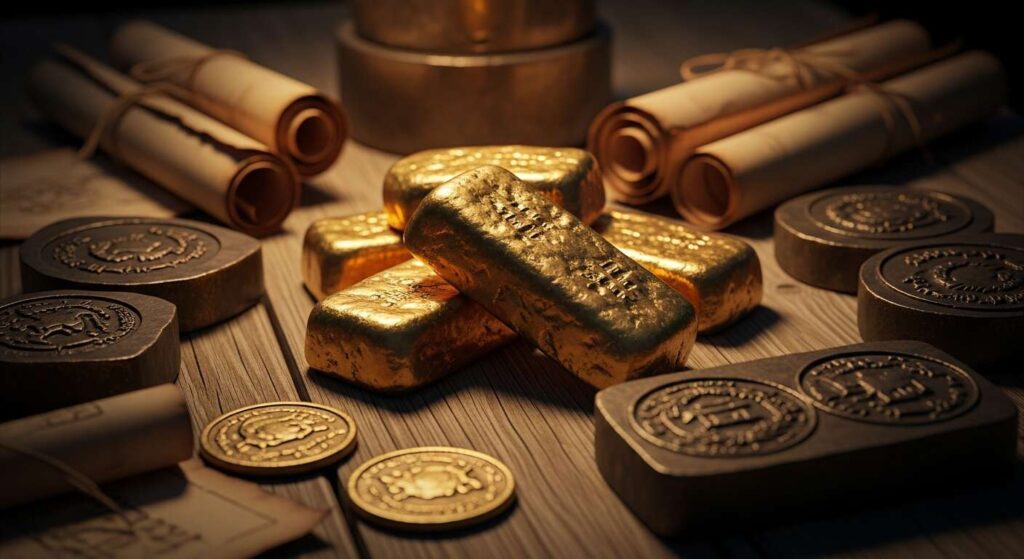
The concept of wealth preservation has captivated human societies for millennia, with precious metals serving as the cornerstone of financial security long before modern banking systems emerged. Ancient civilisations understood the intrinsic value of gold and silver, developing sophisticated methods to accumulate, measure, and trade these commodities. From Roman poets describing hidden talents of silver to Greek merchants weighing gold bullion in bustling marketplaces, the ancients demonstrated remarkable financial acumen that resonates with contemporary investment strategies.
The importance of precious metals in antiquity
Gold and silver as stores of value
Precious metals represented far more than mere currency in ancient societies. They embodied stability and permanence in economies where coinage could be debased and political upheaval threatened financial security. Unlike perishable goods or fragile paper currencies that would emerge centuries later, gold and silver maintained their value across generations.
The ancients recognised several key advantages of precious metal investments:
- Resistance to corrosion and deterioration over time
- Universal acceptance across different cultures and regions
- Portability relative to other forms of wealth such as land or livestock
- Divisibility for transactions of varying sizes
- Intrinsic beauty that enhanced their desirability
Protection against economic instability
Ancient economies faced numerous challenges, from currency debasement by rulers seeking to finance military campaigns to inflation caused by sudden influxes of precious metals from conquered territories. Wealthy individuals protected themselves by converting liquid assets into bullion, which could be stored securely and retrieved when needed. This practice proved particularly valuable during periods of political transition when the value of official coinage might fluctuate dramatically.
The strategic importance of precious metals extended beyond individual wealth preservation to encompass broader economic functions within ancient societies, necessitating standardised methods of measurement and valuation.
Ancient methods of measuring precious metals
The talent system
The talent emerged as the primary unit for measuring substantial quantities of precious metals throughout the Mediterranean world. Weighing approximately 25 kilograms of silver, a single talent represented enormous wealth accessible only to the most prosperous members of society. This standardisation facilitated large-scale transactions and enabled merchants to conduct business across vast distances with confidence in the agreed-upon values.
| Unit | Approximate Weight | Relative Value |
|---|---|---|
| Talent | 25 kg | Highest denomination |
| Mina | 430 g | 1/60 of a talent |
| Shekel | 8.5 g | 1/3000 of a talent |
Assaying and verification techniques
Ancient societies developed sophisticated methods for assessing the purity of precious metals. Touchstone testing, which involved rubbing gold against a dark stone and comparing the resulting streak to known standards, allowed merchants to quickly verify authenticity. More precise techniques included fire assaying, where metals were heated to separate pure gold or silver from base metal impurities.
Professional money changers and assayers established themselves in major trading centres, providing verification services that underpinned commercial confidence. Their expertise proved essential in markets where precious metals changed hands frequently.
The markets for gold and silver in history
Trading centres and commercial hubs
Major cities throughout the ancient world developed specialised markets where precious metals could be bought, sold, and exchanged. Athens, Rome, Alexandria, and later Constantinople hosted thriving bullion markets where merchants, bankers, and private investors converged. These marketplaces operated with remarkable sophistication, featuring established exchange rates, credit arrangements, and even rudimentary forms of futures contracts.
The physical layout of these markets reflected their importance:
- Secure vaults for storing valuable commodities
- Assaying stations for verifying metal purity
- Money changing tables operated by licensed professionals
- Guard posts to prevent theft and maintain order
- Public records of major transactions
Price fluctuations and market dynamics
Ancient precious metal markets experienced price volatility driven by various factors including military conquests, mining discoveries, and shifts in trade routes. The Roman conquest of Dacia, for instance, brought vast quantities of gold into circulation, temporarily affecting market prices throughout the empire. Savvy investors monitored these developments, adjusting their holdings accordingly to maximise returns or preserve capital.
Understanding these market dynamics required knowledge that extended beyond individual city-states, particularly as trade networks expanded across continents and seas.
Precious metals in the viking era
Hacksilver and weight-based economies
Viking societies developed a distinctive approach to precious metal investment centred on hacksilver, fragments of silver jewellery, coins, and ingots valued purely by weight rather than artistic merit. This pragmatic system allowed Vikings to conduct transactions with remarkable flexibility, cutting pieces from larger items to match required payment amounts precisely.
Viking traders carried portable scales and weights, enabling them to assess value anywhere from Scandinavian fjords to Byzantine markets. This mobility reflected the peripatetic nature of Viking commerce and raiding activities.
Hoarding practices and buried treasure
Archaeological evidence reveals extensive hoarding behaviour amongst Viking populations, with thousands of silver caches discovered across Scandinavia and Viking-influenced territories. These hoards served multiple purposes: safeguarding wealth during dangerous journeys, protecting assets from theft, and potentially representing offerings to deities. The prevalence of buried treasure indicates both the importance of precious metals in Viking society and the precarious nature of wealth preservation in that era.
The Viking approach to precious metals demonstrated principles that transcended cultural boundaries, connecting with broader patterns of wealth management overseen by political authorities.
The roles of emissaries and emperors
State control of precious metal supplies
Rulers throughout antiquity recognised that controlling precious metal supplies conferred enormous political and economic power. Emperors established state monopolies over mining operations, regulated bullion markets, and employed emissaries to secure access to distant sources of gold and silver. These officials negotiated trade agreements, supervised tribute payments, and sometimes engaged in espionage to discover new mineral deposits.
The Roman Empire exemplified this centralised approach:
- Imperial mints produced standardised coinage under strict supervision
- Mining operations in conquered territories funded military expansion
- Trade missions sought precious metals from as far afield as India and sub-Saharan Africa
- Legal frameworks governed private ownership and transaction of bullion
Diplomatic gifts and tribute systems
Precious metals functioned as instruments of diplomacy, with rulers exchanging elaborate gold and silver gifts to cement alliances or demonstrate superiority. Tribute systems required subjugated peoples to deliver specified quantities of precious metals annually, creating predictable revenue streams for imperial treasuries. These practices intertwined political relationships with economic considerations, making precious metals central to statecraft.
The historical precedents established by ancient rulers continue to influence contemporary approaches to precious metal investment and wealth preservation.
The modern impact of ancient practices on today’s investments
Continuity of investment principles
Contemporary investors employ strategies that would be recognisable to ancient wealth managers. The principle of diversifying assets to include precious metals as hedges against currency instability mirrors practices from millennia past. Modern gold bullion bars, standardised at 400 troy ounces, echo the ancient preference for uniform weights that facilitate trading and storage.
Financial advisers today recommend precious metal allocations using reasoning familiar to ancient investors:
- Protection against inflation and currency devaluation
- Portfolio diversification to reduce overall risk
- Tangible assets that maintain value during economic crises
- Universal acceptance and liquidity across markets
Evolution of market infrastructure
Whilst the fundamental appeal of precious metals remains constant, market infrastructure has evolved dramatically. Electronic trading platforms, secure vault networks, and sophisticated derivatives markets have replaced ancient marketplaces, yet the underlying motivations persist. Investors still seek the stability and permanence that attracted ancient Romans to hide talents of silver in their homes.
The development of exchange-traded funds backed by physical precious metals represents a modern innovation built upon ancient foundations, allowing investors to gain exposure without the logistical challenges of physical storage that concerned ancient wealth holders.
The enduring appeal of precious metals across millennia demonstrates fundamental truths about human economic behaviour. Ancient investors recognised that gold and silver offered security when political systems faltered and currencies lost value. Their sophisticated approaches to measuring, trading, and storing these commodities laid groundwork for modern financial practices. From Roman poets describing hidden bullion to Viking traders weighing hacksilver, the historical record reveals consistent patterns of wealth preservation that transcend cultural and temporal boundaries. Understanding these ancient practices enriches contemporary investment strategies, connecting modern portfolios to timeless principles of financial security.