


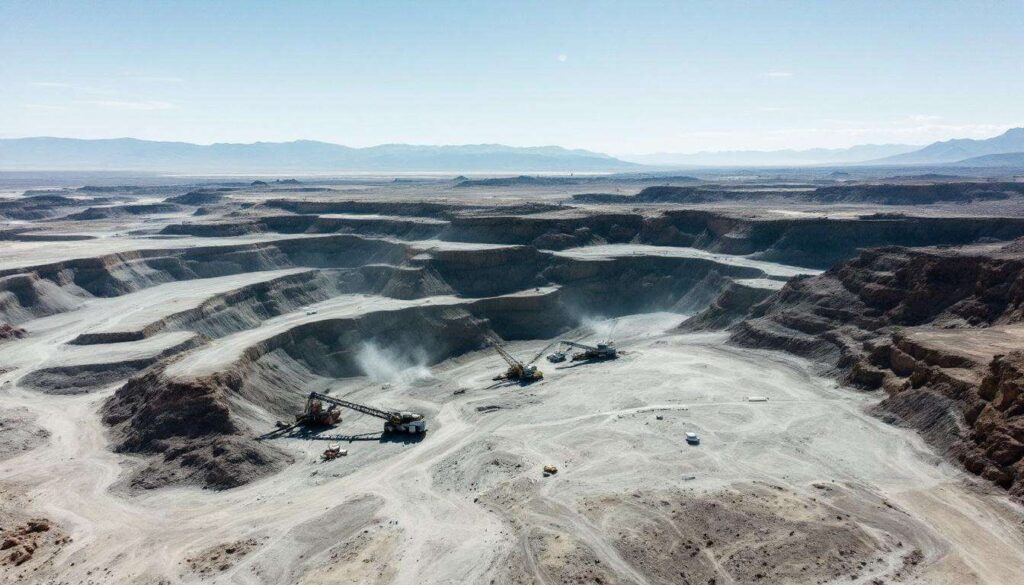
The pursuit of lithium has become one of the defining challenges of modern industry, driven by the rapid expansion of electric vehicles and renewable energy storage systems. Beneath the stunning white expanse of Bolivia’s Salar de Uyuni lies the world’s largest known lithium deposit, a resource that promises to power the transition away from fossil fuels. Yet this promise comes with profound environmental, social, and ethical costs that are increasingly difficult to ignore. As extraction activities intensify across this iconic salt flat, questions emerge about whether the benefits of lithium mining justify the damage inflicted on fragile ecosystems and vulnerable communities.
The geostrategic importance of lithium deposits
The global race for lithium resources
Lithium has emerged as a critical mineral in the global economy, with demand projected to increase more than 40 times by 2040 according to the International Energy Agency. This surge is driven primarily by the electric vehicle revolution, with lithium-ion batteries expected to power nearly 60% of new vehicle sales by 2030. Nations possessing substantial lithium reserves have found themselves at the centre of geopolitical competition, as countries scramble to secure supply chains for this essential resource.
The so-called “Lithium Triangle” spanning Bolivia, Chile, and Argentina contains over half of the world’s known lithium reserves. Bolivia’s Salar de Uyuni alone is estimated to hold approximately 21 million tonnes of lithium, making it the single largest deposit globally. This concentration of resources has transformed South American geopolitics, with governments negotiating complex agreements with international mining corporations whilst attempting to balance national interests with environmental concerns.
Economic implications for resource-rich nations
The economic potential of lithium extraction presents both opportunities and challenges for developing nations. Countries like Bolivia view lithium as a pathway to economic development and reduced dependency on traditional exports. However, the rush to exploit these resources has created tensions between:
- National sovereignty and foreign investment requirements
- Short-term economic gains and long-term environmental sustainability
- Central government priorities and local community needs
- Industrial development and preservation of natural heritage sites
Recent discoveries, including the McDermitt Caldera deposit on the Nevada-Oregon border containing between 20-40 million metric tonnes of lithium, have further intensified global competition. This volcanic formation, created approximately 16.4 million years ago, represents a potential shift in the geographic distribution of lithium production, though economic viability remains under assessment.
Understanding these strategic dynamics provides essential context for examining the environmental toll that lithium extraction exacts on local ecosystems.
The environmental impacts of lithium exploitation
Water consumption and scarcity concerns
Lithium extraction through brine processing is an extraordinarily water-intensive operation, consuming approximately 2.2 million litres of water per tonne of lithium produced. At the Salar de Uyuni, water is pumped from depths of up to 50 metres before being channelled into vast evaporation ponds where lithium concentrates whilst other salts crystallise. This process can take between 12 and 18 months, during which enormous quantities of water are lost to evaporation in regions already experiencing water stress.
The consequences for local water tables are severe. Communities surrounding lithium operations have reported:
- Declining groundwater levels affecting agricultural productivity
- Reduced water availability for livestock and domestic use
- Contamination of remaining water sources with mining chemicals
- Disruption of natural hydrological cycles in fragile desert ecosystems
Chemical contamination and ecosystem disruption
Research conducted by Dr. Avner Vengosh at Duke University has revealed that lithium extraction processes amplify risks of chemical contamination in surrounding ecosystems. The evaporation ponds used in brine processing contain not only lithium but also high concentrations of other minerals and processing chemicals that can leach into soil and groundwater. These chemical risks extend far beyond the immediate mining area, potentially affecting ecosystems across vast distances.
| Environmental impact | Severity level | Affected area |
|---|---|---|
| Water table depletion | High | 50-100 km radius |
| Soil contamination | Moderate to high | 20-50 km radius |
| Air quality degradation | Moderate | 10-30 km radius |
| Biodiversity loss | High | Regional scale |
The transformation of natural landscapes into industrial zones has profound implications not only for the environment but also for the people who depend on these ecosystems for their livelihoods.
Social consequences of mining
Displacement and disruption of local communities
The expansion of lithium mining operations has fundamentally altered the social fabric of communities near extraction sites. Indigenous populations who have inhabited regions surrounding the Salar de Uyuni for generations find themselves confronting rapid industrialisation that threatens traditional ways of life. The salt flats have long supported local economies through tourism and small-scale salt harvesting, activities now increasingly marginalised by large-scale mining operations.
Communities report experiencing:
- Limited consultation in decision-making processes affecting their lands
- Inadequate compensation for loss of access to traditional resources
- Cultural disruption as mining transforms the landscape and local economy
- Health concerns related to dust, noise, and chemical exposure from mining activities
Labour rights and working conditions
The lithium mining industry has faced serious allegations regarding labour practices, particularly in operations managed by international corporations. A Chinese-led lithium mine in Namibia has been scrutinised for creating stark disparities in living conditions between local and Chinese workers, highlighting systemic issues in labour rights within the mining sector. Reports indicate that local workers often face:
- Lower wages compared to foreign workers performing similar tasks
- Inadequate safety equipment and training
- Limited opportunities for advancement or skills development
- Unsafe working conditions with insufficient regulatory oversight
These labour concerns reflect broader patterns of exploitation that have historically characterised extractive industries in developing nations. The promise of employment and economic development often fails to materialise for local populations, whilst profits flow primarily to international corporations and distant shareholders.
Beyond these immediate social impacts, the very landscapes transformed by lithium extraction present a striking visual paradox that encapsulates the contradictions inherent in this industry.
The paradox of colourful lithium fields
The aesthetic transformation of natural landscapes
The evaporation ponds used in lithium brine processing create visually striking patterns across the landscape, with colours ranging from brilliant turquoise to deep purple depending on mineral concentrations and algae growth. These artificial pools, visible from satellite imagery, have become an unintended tourist attraction, drawing photographers and curious visitors to witness the surreal beauty of industrial processes. Yet this aesthetic appeal masks the environmental degradation occurring beneath the colourful surface.
The Salar de Uyuni itself represents a natural wonder, its vast white expanse creating mirror-like reflections during the rainy season that attract visitors from around the world. The juxtaposition of this pristine natural beauty with the industrial infrastructure of lithium extraction creates a visual and philosophical tension: the very technology promoted as environmentally friendly requires processes that fundamentally alter and potentially destroy the environments from which it is sourced.
Tourism versus industrial development
The expansion of lithium mining operations directly conflicts with tourism, which has become an increasingly important economic sector for Bolivia. The Salar de Uyuni attracts tens of thousands of international visitors annually, generating revenue for local communities through:
- Guided tours across the salt flats
- Accommodation and hospitality services
- Local craft sales and cultural experiences
- Photography expeditions and adventure tourism
As mining operations expand, concerns grow that industrial development will diminish the natural beauty that makes the region attractive to visitors. The long-term economic calculation becomes complex: does the immediate revenue from lithium extraction outweigh the sustainable income potential from tourism and the preservation of natural heritage ?
These contradictions have prompted growing calls for alternative approaches to securing the lithium supplies necessary for technological transition.
Ethical alternatives to lithium extraction
Recycling and circular economy approaches
One of the most promising alternatives to expanded lithium mining lies in developing robust recycling infrastructure for lithium-ion batteries. Currently, less than 5% of lithium-ion batteries are recycled globally, representing an enormous waste of resources. Technological advances in battery recycling could potentially recover up to 95% of lithium from used batteries, dramatically reducing the need for primary extraction.
Circular economy approaches to lithium supply include:
- Design standards requiring batteries to be easily disassembled for recycling
- Extended producer responsibility schemes holding manufacturers accountable for end-of-life battery management
- Investment in recycling facilities using advanced hydrometallurgical and pyrometallurgical processes
- Development of second-life applications for batteries no longer suitable for vehicles but viable for stationary storage
Alternative battery technologies
Research into alternative battery chemistries offers potential pathways to reduce lithium dependency. Sodium-ion batteries, which use abundant and widely distributed sodium rather than lithium, have shown promise for certain applications, particularly stationary energy storage where weight is less critical than in vehicles. Other emerging technologies include:
- Solid-state batteries offering improved safety and energy density
- Lithium-sulphur batteries potentially requiring less lithium per unit of energy stored
- Zinc-air and aluminium-air batteries for specific applications
- Flow batteries using liquid electrolytes for large-scale energy storage
Whilst these alternatives remain largely in development stages, they represent important hedges against lithium supply constraints and environmental concerns.
These technological and systemic alternatives raise fundamental questions about whether continued reliance on lithium extraction is necessary or whether more sustainable pathways exist.
Towards a sustainable future without lithium ?
The feasibility of lithium-free technologies
Completely eliminating lithium from energy storage systems remains technologically challenging in the near term. Lithium-ion batteries currently offer the best combination of energy density, cycle life, and cost for electric vehicles and portable electronics. However, the question is not whether lithium can be entirely eliminated immediately, but rather how quickly dependency can be reduced through a combination of efficiency improvements, alternative technologies, and circular economy practices.
Pathways towards reduced lithium dependency include:
- Improved public transportation reducing overall vehicle battery demand
- Shared mobility models decreasing the number of vehicles requiring batteries
- Energy efficiency measures reducing overall electricity storage needs
- Diversification of battery chemistries across different applications
Policy frameworks for responsible sourcing
Governments and international organisations have begun developing regulatory frameworks aimed at ensuring more responsible lithium sourcing. The Biden administration’s push to increase electric vehicle market share has been accompanied by initiatives promoting domestic lithium production and recycling. European Union regulations increasingly require transparency in battery supply chains and minimum recycled content in new batteries.
| Policy approach | Implementation region | Key requirements |
|---|---|---|
| Supply chain transparency | European Union | Documented origin and processing of materials |
| Recycled content mandates | European Union | Minimum percentages of recycled lithium in new batteries |
| Environmental impact assessments | Multiple jurisdictions | Comprehensive evaluation before mining approval |
| Community consultation requirements | Various national frameworks | Meaningful engagement with affected populations |
These policy developments represent important steps towards more sustainable lithium sourcing, though enforcement and effectiveness vary considerably across jurisdictions.
The challenge facing global society is balancing the urgent need to transition away from fossil fuels with the imperative to protect vulnerable ecosystems and communities. The world’s largest lithium deposit beneath Bolivia’s Salar de Uyuni encapsulates this tension perfectly: a resource essential for green technology that requires environmentally destructive extraction processes. As demand continues to surge, the lithium industry must confront its environmental and social impacts through improved extraction techniques, robust recycling infrastructure, investment in alternative technologies, and genuine respect for the rights of affected communities. The transition to sustainable energy cannot be built on the exploitation of people and places least able to resist or recover from industrial damage. Only through comprehensive approaches addressing both supply and demand can the promise of lithium-powered technology be reconciled with principles of environmental stewardship and social justice.