



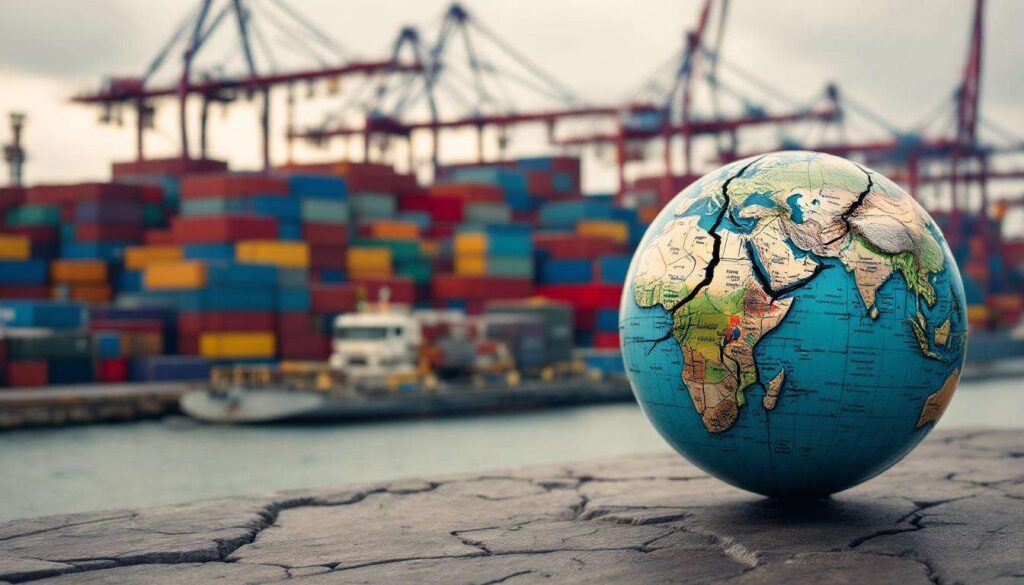
Global food systems face a profound paradox: sufficient food exists to nourish every person on the planet, yet millions continue to suffer from hunger and malnutrition. Recent data reveals that approximately 8% of the global population experienced hunger, whilst a staggering 28% faced food insecurity. This disparity stems not from a lack of production but from the structural inadequacies of how food moves from farm to table. Unsustainable global supply chains, characterised by inefficiency, inequality, and environmental degradation, lie at the heart of this crisis. Understanding these systemic failures is essential to addressing the mounting challenge of feeding a growing population whilst protecting the planet’s finite resources.
The impact of supply chains on food security
How globalised networks undermine local systems
Modern food supply chains span continents, connecting producers in one hemisphere with consumers in another. Whilst this globalisation has enabled year-round availability of diverse products, it has simultaneously weakened local food systems that once provided communities with resilient access to nutrition. Large-scale commercial agriculture prioritises export-oriented production, often at the expense of crops traditionally grown for local consumption.
This shift creates several critical problems:
- Displacement of smallholder farmers who cannot compete with industrial operations
- Loss of agricultural biodiversity as monocultures replace varied traditional crops
- Increased vulnerability to price fluctuations in international markets
- Dependency on imported food in regions capable of producing their own
The paradox of food-producing nations facing hunger
Brazil exemplifies this troubling contradiction. As one of the world’s leading agricultural exporters, the nation produces vast quantities of soybeans, beef, and other commodities for global markets. Yet significant portions of its population have historically struggled with food insecurity. The election of the Workers’ Party government marked a turning point, introducing comprehensive social programmes including Fome Zero and Bolsa Família. These initiatives combined direct cash transfers with nutritional education and support for family farming.
| Period | Policy approach | Food security status |
|---|---|---|
| Pre-2002 | Export-focused agriculture | High food insecurity |
| 2002-2014 | Pro-poor social programmes | Removed from UN hunger map |
| Post-2022 | Policy reversal | Returned to hunger map |
The success of these programmes demonstrated that political will and targeted investment could dramatically reduce hunger even in countries with existing food production capacity. However, subsequent policy shifts and external shocks revealed the fragility of these gains.
Understanding these dynamics reveals how supply chain structures can either support or undermine food security, setting the stage for examining how global disruptions amplify these vulnerabilities.
The effects of global shocks on food insecurity
Pandemic disruptions and cascading consequences
The COVID-19 pandemic exposed the brittleness of interconnected food systems. Lockdowns, border closures, and labour shortages created bottlenecks at every stage of the supply chain. Transportation delays left produce rotting in fields whilst supermarket shelves emptied. Price volatility surged as speculation and panic buying distorted normal market mechanisms.
Brazil’s reappearance on the UN hunger map illustrates these cascading effects. Despite maintaining agricultural production levels, distribution failures and economic contraction prevented food from reaching vulnerable populations. Rising unemployment reduced purchasing power precisely when food prices escalated, creating a perfect storm of inaccessibility.
Climate change as a persistent threat
Beyond acute crises, chronic environmental changes increasingly destabilise food systems. Extreme weather events disrupt planting and harvesting cycles, whilst shifting precipitation patterns render traditional agricultural zones less productive. These climate impacts interact with supply chain vulnerabilities:
- Droughts reduce crop yields, tightening global supplies
- Floods damage infrastructure, preventing food movement
- Temperature extremes compromise storage facilities
- Sea level rise threatens coastal agricultural areas
Geopolitical conflicts and trade disruptions
Armed conflicts and political tensions create immediate supply chain ruptures. When major grain-producing regions become conflict zones, global prices spike and import-dependent nations face shortages. Trade sanctions and export restrictions further fragment international food markets, leaving the most vulnerable populations exposed to sudden scarcity.
These various shocks reveal fundamental weaknesses in how global supply chains are designed and operated, necessitating a closer examination of their structural flaws.
The flaws of global supply chains
Excessive concentration and lack of resilience
Modern food supply chains suffer from dangerous consolidation. A handful of multinational corporations control vast segments of production, processing, and distribution. This concentration creates single points of failure where disruption at one node ripples throughout the entire system. When a major processing facility closes or a key shipping route becomes impassable, alternatives often do not exist.
Environmental unsustainability
The environmental footprint of globalised food systems extends far beyond agricultural production itself. Long-distance transportation generates substantial greenhouse gas emissions, whilst refrigeration and packaging add further environmental costs. Industrial agriculture depletes soil health, contaminates water sources, and destroys natural habitats. These practices undermine the very ecosystems upon which future food production depends.
| Supply chain stage | Environmental impact | Sustainability concern |
|---|---|---|
| Production | Soil degradation, water depletion | Long-term productivity loss |
| Processing | Energy consumption, waste generation | Carbon emissions, pollution |
| Transportation | Fossil fuel combustion | Climate change acceleration |
| Retail | Food waste, packaging materials | Resource inefficiency |
Inequitable distribution of benefits and costs
Global supply chains concentrate wealth amongst large corporations and landowners whilst marginalising smallholder farmers and rural communities. Producers in developing nations often receive minimal compensation for their labour and resources, whilst intermediaries and retailers capture the majority of value. This economic structure perpetuates poverty in food-producing regions, creating the paradox of hunger amidst abundance.
Recognising these systemic flaws points towards the need for innovative approaches that can address both immediate supply challenges and underlying structural problems.
Innovation as a remedy to supply issues
Technological advances in production and distribution
Emerging technologies offer potential solutions to supply chain inefficiencies. Precision agriculture utilises sensors, drones, and data analytics to optimise resource use and increase yields whilst reducing environmental impact. Blockchain systems can enhance traceability, reducing fraud and improving food safety. Digital platforms connect farmers directly with consumers, eliminating intermediaries and ensuring fairer compensation.
Localised and decentralised food systems
Innovation extends beyond technology to encompass organisational models that prioritise resilience and sustainability. Urban agriculture, community-supported agriculture schemes, and regional food hubs create shorter supply chains that reduce transportation needs and strengthen local economies. These approaches build redundancy into food systems, ensuring multiple pathways for food to reach consumers.
- Vertical farms maximise production in urban environments
- Cooperative networks empower small-scale producers
- Farmers’ markets reconnect consumers with food sources
- Food policy councils coordinate regional planning
Sustainable intensification practices
Agricultural innovation need not sacrifice productivity for sustainability. Agroecological methods integrate traditional knowledge with scientific advances to enhance yields whilst regenerating ecosystems. Crop rotation, integrated pest management, and conservation tillage maintain soil health and biodiversity. These practices demonstrate that food security and environmental stewardship can advance together rather than in opposition.
Whilst innovation provides tools for improvement, achieving systemic change requires broader transformation of how supply chains are structured and governed.
Towards sustainable supply chains for food security
Prioritising local food sovereignty
Sustainable food systems must empower communities to control their own food production and distribution. Food sovereignty recognises the right of peoples to define their agricultural policies rather than having them dictated by international market forces. Supporting smallholder farmers, protecting indigenous agricultural practices, and investing in local infrastructure creates resilient systems adapted to regional conditions.
Redesigning logistics for efficiency and equity
Transforming supply chains requires rethinking transportation, storage, and distribution networks. Investments in rural infrastructure reduce post-harvest losses and connect remote producers to markets. Cold chain improvements extend the shelf life of perishable goods, reducing waste. Strategic positioning of processing facilities minimises transportation distances whilst creating employment in agricultural regions.
Integrating circular economy principles
Sustainable supply chains must eliminate waste by treating it as a resource. Food waste can be converted into animal feed, compost, or bioenergy. Packaging materials should be biodegradable or fully recyclable. By-products from processing can become inputs for other industries. This circular approach reduces environmental impact whilst creating economic opportunities.
These structural transformations require supportive policy frameworks that align economic incentives with sustainability and equity goals.
The role of economic policies in food security
International financial institutions and development priorities
The World Bank and similar organisations wield significant influence over agricultural development through their funding decisions and policy recommendations. Whilst these institutions have supported agricultural modernisation and trade facilitation, their approaches have sometimes prioritised export competitiveness over local food security. Redirecting investment towards sustainable smallholder agriculture and regional food systems could yield greater benefits for vulnerable populations.
National policy frameworks for food rights
Establishing food security as a fundamental right rather than a market outcome requires comprehensive policy action. This includes:
- Legal frameworks guaranteeing access to adequate nutrition
- Social protection programmes providing safety nets during crises
- Agricultural subsidies supporting sustainable practices rather than industrial monocultures
- Land reform ensuring equitable access to productive resources
- Public procurement favouring local and sustainable producers
Trade policies balancing openness with protection
International trade can enhance food security by allowing regions to specialise in suitable crops and access diverse products. However, unrestricted liberalisation can undermine local producers and increase vulnerability to global price shocks. Balanced trade policies should protect nascent agricultural sectors whilst facilitating beneficial exchanges, ensuring that commerce serves food security rather than compromising it.
| Policy approach | Potential benefits | Implementation challenges |
|---|---|---|
| Local procurement mandates | Supports regional farmers | May increase costs initially |
| Strategic reserves | Buffers against price volatility | Requires storage infrastructure |
| Sustainable agriculture subsidies | Encourages environmental practices | Demands monitoring systems |
Addressing food insecurity through sustainable supply chains demands coordinated action across multiple dimensions, from technological innovation to fundamental policy reform. The persistence of hunger amidst global abundance reveals that current systems prioritise efficiency and profit over equity and resilience. Transforming these structures requires recognising food security as a human right rather than a commodity market outcome. Brazil’s experience demonstrates both the potential for rapid progress through targeted social programmes and the fragility of gains when political commitment wavers. Moving forward, strengthening local food systems, investing in sustainable agricultural practices, and implementing policies that ensure equitable access represent essential steps. Only through comprehensive reform can supply chains serve their fundamental purpose: nourishing all people whilst preserving the environmental foundations upon which future generations depend.