



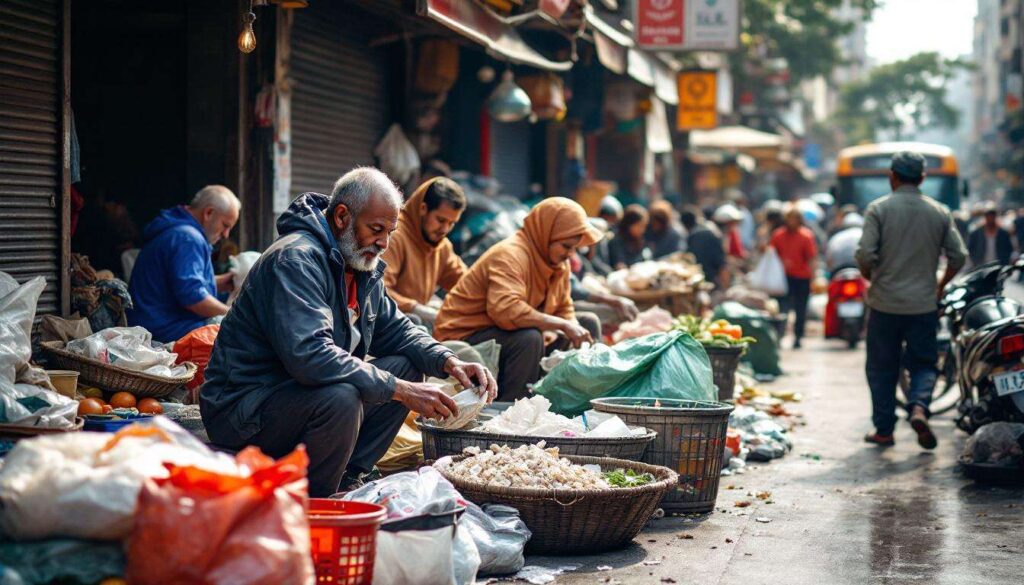
Urban centres across the globe are expanding at an unprecedented rate, bringing with them complex challenges related to food security, waste management, and economic inclusion. As populations concentrate in cities, traditional systems often struggle to keep pace with demand. Yet within this rapid transformation, two groups of informal workers are proving indispensable: street vendors who provide accessible food options and waste pickers who recover valuable materials from discarded refuse. These actors, often marginalised and overlooked, possess unique capabilities that can support sustainable urban development. The Milan Urban Food Policy Pact, endorsed by 330 cities worldwide, recognises the critical need for sustainable and equitable urban food systems. With approximately 45% of the global population currently residing in cities and projections suggesting this could reach 68% by 2050, understanding how informal workers contribute to urban resilience has never been more vital.
The role of street vendors in the urban economy
Street vendors constitute a fundamental component of urban food systems, particularly in rapidly growing cities where formal retail infrastructure often fails to meet the needs of all residents. These mobile entrepreneurs provide affordable and nutritious food options to millions of urban dwellers daily, bridging gaps in food accessibility that conventional supermarkets and restaurants cannot fill.
Economic contributions and accessibility
The economic impact of street vending extends far beyond simple transactions. Street vendors generate crucial income for families and communities whilst simultaneously offering diverse meal options at price points accessible to low-income populations. Their presence ensures that fresh produce, prepared meals, and traditional foods remain within reach of those who might otherwise face food insecurity.
- Provision of affordable nutritious meals to diverse urban populations
- Creation of employment opportunities requiring minimal capital investment
- Preservation and promotion of traditional culinary practices
- Contribution to vibrant street culture and community cohesion
Challenges faced by street vendors
Despite their valuable contributions, street vendors frequently encounter hostility from municipal authorities who cite concerns regarding traffic congestion, public health standards, and urban aesthetics. This tension often results in harassment, confiscation of goods, and forced relocations that undermine the livelihoods of vulnerable workers. The lack of formal recognition prevents vendors from accessing credit, insurance, and legal protections that would enable them to operate more effectively and hygienically.
Recognising the essential services provided by street vendors opens pathways to addressing waste management challenges through another critical group of informal workers.
Contribution of waste pickers to sustainability
Approximately one-third of all food produced globally is wasted, ending up in landfills where it represents a staggering loss of resources, energy, and labour. Waste pickers perform the vital function of recovering and recycling materials that fall outside formal waste management systems, thereby reducing environmental impact and reclaiming economic value from discarded goods.
Environmental and economic benefits
Waste pickers significantly reduce the volume of refuse requiring disposal whilst recovering materials that can re-enter productive cycles. Their work decreases methane emissions from landfills, conserves raw materials, and reduces the energy required for manufacturing new products. This informal recycling sector operates with remarkable efficiency, often achieving recovery rates that surpass formal systems.
| Contribution | Impact |
|---|---|
| Material recovery | Reduction of landfill volume and associated emissions |
| Resource conservation | Decreased demand for virgin materials |
| Economic value creation | Income generation for marginalised communities |
| Energy savings | Lower energy consumption in manufacturing processes |
Social dimensions of waste picking
Waste picking provides livelihoods for some of the most vulnerable urban populations, including migrants, displaced persons, and those excluded from formal employment. However, these workers typically operate in hazardous conditions without adequate protective equipment, legal recognition, or social protections. Their essential environmental services go largely unacknowledged, perpetuating cycles of poverty and marginalisation.
Addressing the challenges faced by both street vendors and waste pickers requires thoughtful policy interventions that recognise their contributions whilst supporting improved working conditions.
Urban policies: integrating informal actors
Creating an enabling environment for street vendors and waste pickers demands both political will and strategic investments. Progressive urban policies can transform informal workers from perceived problems into recognised partners in sustainable city development.
Formalisation and recognition
Successful integration begins with formal recognition of informal workers as legitimate economic actors. This includes issuing permits, designating appropriate vending zones, and establishing waste picker cooperatives that can negotiate with municipalities and private waste management companies. Formalisation enables access to financial services, training programmes, and legal protections whilst facilitating regulatory compliance.
- Development of licensing systems that balance regulation with accessibility
- Creation of designated vending areas with basic infrastructure
- Recognition of waste picker cooperatives as service providers
- Integration of informal workers into urban planning processes
International examples of successful integration
Brazil has pioneered the formalisation of waste pickers, incorporating cooperatives into municipal waste management contracts and providing equipment, training, and fair compensation. This model demonstrates how adapted policies can improve living conditions whilst enhancing environmental outcomes. Similarly, infrastructure investments in informal settlements in Indonesia and Kenya have enabled residents to access economic opportunities and essential services, demonstrating the transformative potential of inclusive urban development.
Whilst policy frameworks provide essential foundations, cities must also navigate specific challenges and seize opportunities presented by rapid urban growth.
Challenges and opportunities for growing cities
Rapid urbanisation presents cities with complex dilemmas regarding food security, waste management, and economic inclusion. However, these challenges also create opportunities to build more resilient and equitable urban systems by leveraging the capabilities of informal workers.
Infrastructure and resource constraints
Growing cities often struggle with inadequate infrastructure for food distribution and waste management. Formal systems require substantial capital investments and time to develop, creating gaps that informal workers already fill. Rather than viewing street vendors and waste pickers as temporary solutions, cities can integrate them into long-term strategies that combine formal and informal approaches.
Opportunities for innovation
Urban growth creates demand for innovative solutions that combine efficiency with social inclusion. Digital platforms can connect street vendors with customers whilst improving food safety through training and monitoring. Waste picker cooperatives can partner with municipalities to expand recycling programmes and develop new markets for recovered materials. These innovations harness the entrepreneurial energy of informal workers whilst addressing urban challenges.
- Technology-enabled coordination between informal workers and formal systems
- Public-private partnerships that include informal sector representatives
- Skills development programmes tailored to informal workers’ needs
- Financial inclusion initiatives providing access to credit and insurance
Realising these opportunities requires embedding informal workers within broader strategies for sustainable urban development and circular economic models.
Sustainable solutions for the circular economy
The circular economy framework offers a compelling vision for urban systems that minimise waste, maximise resource efficiency, and create economic value throughout product lifecycles. Street vendors and waste pickers are natural participants in circular systems, already performing functions that reduce waste and extend product use.
Closing resource loops
Waste pickers recover materials that can re-enter production cycles, effectively closing resource loops that would otherwise terminate in landfills. Their detailed knowledge of material streams and recovery techniques complements formal recycling infrastructure. By integrating waste pickers into circular economy strategies, cities can achieve higher recovery rates whilst providing decent livelihoods.
Food system circularity
Street vendors contribute to food system circularity by utilising ingredients that might otherwise be wasted, preparing affordable meals from surplus produce, and operating with minimal packaging. Supporting street vendors through improved facilities and hygiene training can enhance these circular practices whilst ensuring food safety and quality.
| Circular practice | Informal worker contribution |
|---|---|
| Material recovery | Waste pickers extract recyclables and reusable items |
| Food waste reduction | Vendors utilise surplus produce and minimise packaging |
| Product life extension | Repair and resale of recovered goods |
| Local resource loops | Neighbourhood-scale recovery and distribution |
Beyond environmental benefits, integrating informal workers into urban systems advances critical goals of social equity and economic opportunity.
Fostering social and economic inclusion
Inclusive urban development ensures that growth benefits all residents, particularly the most marginalised. Street vendors and waste pickers represent populations often excluded from formal economic opportunities due to lack of education, documentation, or capital. Policies that support these workers advance both social justice and economic efficiency.
Pathways to economic empowerment
Formalisation and recognition create pathways for informal workers to improve their economic situations through access to credit, training, and markets. Cooperatives enable collective bargaining and investment in equipment that enhances productivity and safety. These mechanisms transform precarious livelihoods into sustainable enterprises that contribute to household and community prosperity.
Building inclusive cities
Cities that embrace informal workers as partners rather than problems demonstrate commitment to inclusive development that values diverse contributions to urban life. This approach recognises that sustainable cities require economic opportunities accessible to all residents, regardless of formal qualifications or capital resources. Street vendors and waste pickers embody the resilience and entrepreneurship essential for thriving urban communities.
- Recognition of informal work as legitimate economic activity
- Investment in infrastructure supporting informal workers
- Participatory planning processes including informal sector voices
- Social protection systems extending to informal workers
The skills, knowledge, and resilience of street vendors and waste pickers represent significant assets for cities navigating rapid growth and transformation. Their integration into urban food systems and waste management infrastructure offers practical solutions to pressing challenges whilst advancing goals of sustainability and inclusion. Progressive policies demonstrated in Brazil, Indonesia, and Kenya illustrate how formalisation, infrastructure investment, and participatory governance can improve conditions for vulnerable populations whilst enhancing urban services. As cities continue to expand, recognising and supporting informal workers becomes not merely an ethical imperative but a strategic necessity for building resilient, equitable, and sustainable urban futures that serve all inhabitants.