



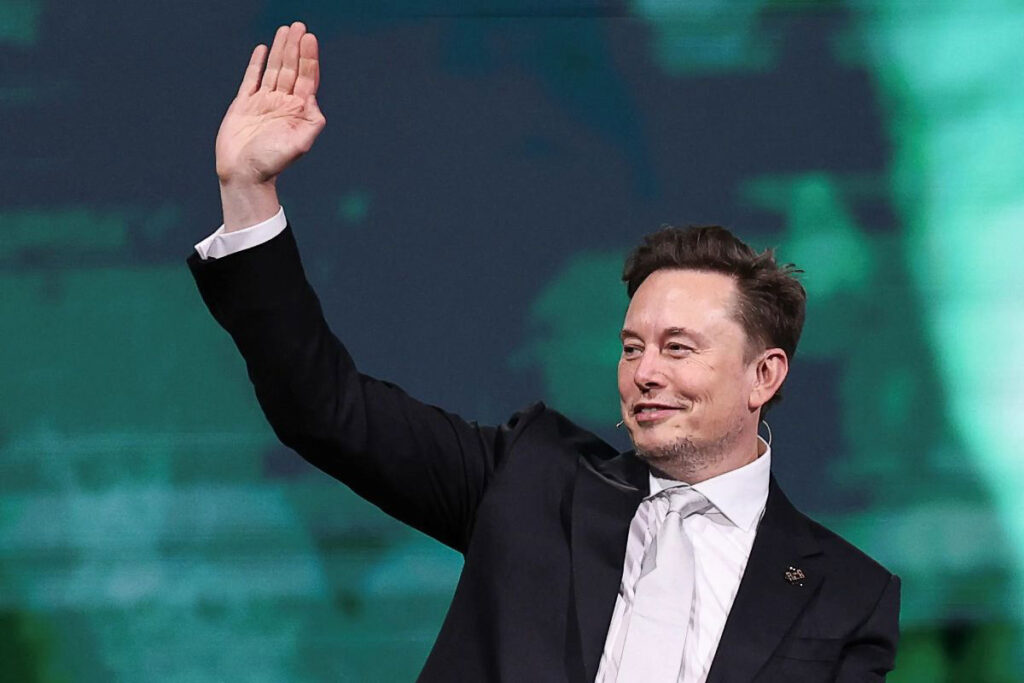
The world’s wealthiest individual has reached a financial milestone that few could have predicted even a decade ago. Elon Musk’s personal fortune now stands at approximately $780 billion, a figure that positions him comfortably at the summit of global wealth rankings. This extraordinary accumulation of capital stems from a diverse portfolio of ventures spanning electric vehicles, space exploration, and most recently, artificial intelligence. The latest catalyst for this wealth surge is xAI, a company focused on artificial intelligence and social networks, which recently secured a $20 billion funding round that propelled its valuation to an astonishing $250 billion. This single investment round added approximately $62 billion to Musk’s personal net worth, demonstrating the transformative power of strategic positioning in emerging technology sectors.
Elon Musk’s ascent towards $800 billion
A trajectory marked by strategic diversification
Musk’s journey towards the $800 billion threshold represents more than simple market speculation or fortunate timing. His wealth accumulation strategy has consistently focused on disruptive technologies across multiple industries. The entrepreneur has positioned himself at the forefront of sectors that promise to reshape human civilisation, from sustainable transportation to interplanetary exploration and now artificial intelligence. This diversification has created a resilient wealth portfolio that benefits from multiple revenue streams and valuation increases.
The mechanics of wealth concentration
The concentration of such immense wealth in a single individual raises important questions about modern capitalism and technological innovation. Musk’s fortune is not held in traditional assets but rather in equity stakes across his various companies. These holdings fluctuate with market sentiment, investor confidence, and company performance metrics. The recent xAI funding round exemplifies how private market valuations can dramatically alter personal wealth figures in remarkably short timeframes.
| Wealth milestone | Approximate value | Primary driver |
|---|---|---|
| Current net worth | $780 billion | xAI valuation surge |
| Recent increase | $62 billion | xAI funding round |
| Distance to $800 billion | $20 billion | Potential future gains |
This unprecedented accumulation of wealth demonstrates how technology ventures can generate value at scales previously unimaginable. The speed at which Musk’s fortune has grown reflects broader trends in technology investment and the premium markets place on companies operating in artificial intelligence and related fields.
The crucial role of xAI in Musk’s enrichment
Understanding xAI’s strategic position
xAI represents Musk’s ambitious entry into the artificial intelligence sector, a field that has captivated global investment attention. The company focuses on developing advanced AI systems whilst maintaining integration with social media platforms. This dual focus creates unique synergies that traditional AI companies cannot replicate. The merger of xAI with the social media platform x has created a powerful ecosystem where AI development and user data converge, potentially accelerating both technological advancement and commercial applications.
The $20 billion funding round explained
The recent funding round that injected $20 billion into xAI stands as one of the largest private investment rounds in technology history. This capital influx reflects:
- Investor confidence in AI’s transformative potential across industries
- Recognition of Musk’s track record in building valuable technology companies
- Strategic positioning at the intersection of social media and artificial intelligence
- Competitive pressure to secure stakes in leading AI ventures
- Anticipation of substantial returns as AI applications proliferate
Musk’s ownership stake and personal gains
Musk maintains approximately 49% ownership of xAI, a substantial controlling interest that translates to roughly $121 billion in personal wealth based on the current valuation. This ownership structure ensures that Musk benefits directly and proportionally from any increase in the company’s market value. The $62 billion surge in his personal fortune following the funding round demonstrates the leverage effect of maintaining significant equity positions in rapidly appreciating assets.
The xAI success story naturally leads to questions about how this valuation was achieved and what it means for the broader technology investment landscape.
An in-depth analysis of xAI’s massive valuation
From $113 billion to $250 billion
The valuation trajectory of xAI tells a remarkable story of market enthusiasm for artificial intelligence ventures. Prior to the recent funding round, xAI carried a valuation of $113 billion, already placing it among the most valuable private technology companies globally. The subsequent leap to $250 billion represents more than a doubling of the company’s perceived worth in a single transaction.
| Valuation metric | Previous value | Current value | Increase |
|---|---|---|---|
| Company valuation | $113 billion | $250 billion | 121% |
| Musk’s stake value | ~$55 billion | ~$121 billion | 120% |
Market dynamics driving the valuation
Several factors contribute to xAI’s extraordinary valuation:
- The global race for AI supremacy amongst major technology players
- Integration with an established social media platform providing data advantages
- Musk’s proven ability to execute ambitious technological visions
- Limited opportunities for investors to access leading AI companies
- Anticipated revenue potential from AI applications across industries
Broader investor participation
The xAI funding round has enriched not only Musk but also other strategic investors. Notable stakeholders have seen their holdings appreciate substantially. For instance, investors holding smaller percentages have nonetheless experienced significant wealth increases, demonstrating how concentrated valuations in technology can create wealth across multiple participants whilst maintaining founder control.
Whilst xAI represents Musk’s newest wealth driver, his established ventures continue to form the foundation of his financial empire.
Tesla and SpaceX: pillars of Musk’s empire
Tesla’s enduring contribution
Tesla remains a cornerstone asset in Musk’s portfolio, representing his initial breakthrough into mass-market disruption. The electric vehicle manufacturer has fundamentally altered the automotive industry’s trajectory whilst generating substantial shareholder value. Musk’s Tesla holdings continue to constitute a significant portion of his overall wealth, though the recent xAI surge has shifted the relative proportions.
SpaceX’s strategic importance
SpaceX represents another pillar of Musk’s wealth, with the private space exploration company achieving valuations that rival established aerospace corporations. The company’s success in reusable rocket technology and commercial satellite deployment has created a sustainable business model in what was previously a government-dominated sector. SpaceX’s valuation contributes billions to Musk’s net worth whilst positioning him at the forefront of humanity’s expansion beyond Earth.
Synergies across the portfolio
The three major companies in Musk’s portfolio create interesting synergies:
- AI developments at xAI potentially enhancing autonomous driving capabilities at Tesla
- Data infrastructure supporting both social media and vehicle connectivity
- Manufacturing expertise transferring between automotive and aerospace applications
- Brand recognition creating halo effects across all ventures
These established ventures provide stability whilst newer initiatives like xAI offer explosive growth potential, a combination that appeals to different investor profiles.
What implications for billionaire investors ?
The changing landscape of wealth creation
Musk’s trajectory offers important lessons for high-net-worth individuals seeking to participate in technology-driven wealth creation. The concentration of value in artificial intelligence ventures suggests that traditional investment strategies may require recalibration. Billionaire investors increasingly recognise that access to private technology companies before public listings can generate returns that dwarf traditional asset classes.
Access and exclusivity challenges
The xAI funding round highlights a persistent challenge in modern wealth accumulation: access to premier investment opportunities remains highly restricted. Participation in such rounds typically requires:
- Existing relationships with company founders or venture capital firms
- Minimum investment thresholds often exceeding tens of millions
- Demonstrated expertise or strategic value beyond capital provision
- Willingness to accept illiquidity for extended periods
- Acceptance of substantial risk despite high valuations
Portfolio allocation considerations
For billionaire investors, the xAI example raises questions about appropriate allocation to emerging technology sectors. Whilst the potential returns are substantial, concentration risk and valuation uncertainties require careful consideration. The dramatic wealth increases experienced by xAI stakeholders must be balanced against the possibility of valuation corrections as market conditions evolve.
As Musk approaches the $800 billion milestone, speculation naturally turns to whether even greater wealth accumulation milestones lie ahead.
Towards new heights: musk future trillionaire ?
The path to $1 trillion
With a current net worth of approximately $780 billion, Musk stands just $220 billion away from becoming the world’s first trillionaire. This once-unthinkable milestone now appears within reach given the trajectory of his various ventures. Several scenarios could propel his wealth beyond the trillion-dollar threshold:
- Continued appreciation of xAI’s valuation as AI adoption accelerates
- Tesla’s expansion into new markets and product categories
- SpaceX achieving profitability in satellite internet services
- Successful public listings of currently private holdings
- Synergistic value creation across the portfolio of companies
Market conditions and sustainability
The sustainability of such extreme wealth concentration depends on multiple factors beyond Musk’s control. Market sentiment towards technology stocks, regulatory environments, and macroeconomic conditions all influence asset valuations. The private market valuations that have driven recent wealth increases may face scrutiny as companies transition to public markets where transparency requirements differ substantially.
Historical context and precedent
No individual in recorded history has accumulated wealth approaching $1 trillion in inflation-adjusted terms. Musk’s potential achievement of this milestone would represent a qualitative shift in wealth concentration. The speed of this accumulation, driven primarily by technology equity appreciation rather than traditional business profits, reflects fundamental changes in how value is created and captured in the modern economy.
Musk’s financial ascent demonstrates the transformative power of strategic positioning in emerging technology sectors. His near-$800 billion fortune stems from ownership stakes in companies operating at the frontiers of artificial intelligence, electric vehicles, and space exploration. The recent xAI funding round, which added $62 billion to his wealth through a single transaction, exemplifies how private market valuations can generate unprecedented personal fortunes. Whilst Tesla and SpaceX provide established foundations, xAI represents the newest and perhaps most dynamic component of his wealth portfolio. For billionaire investors, Musk’s trajectory highlights both the opportunities and access challenges inherent in technology investing. As his net worth approaches $800 billion with credible paths to $1 trillion visible on the horizon, Musk’s financial journey reflects broader trends in wealth concentration, technology valuation, and the evolving relationship between innovation and capital accumulation.