



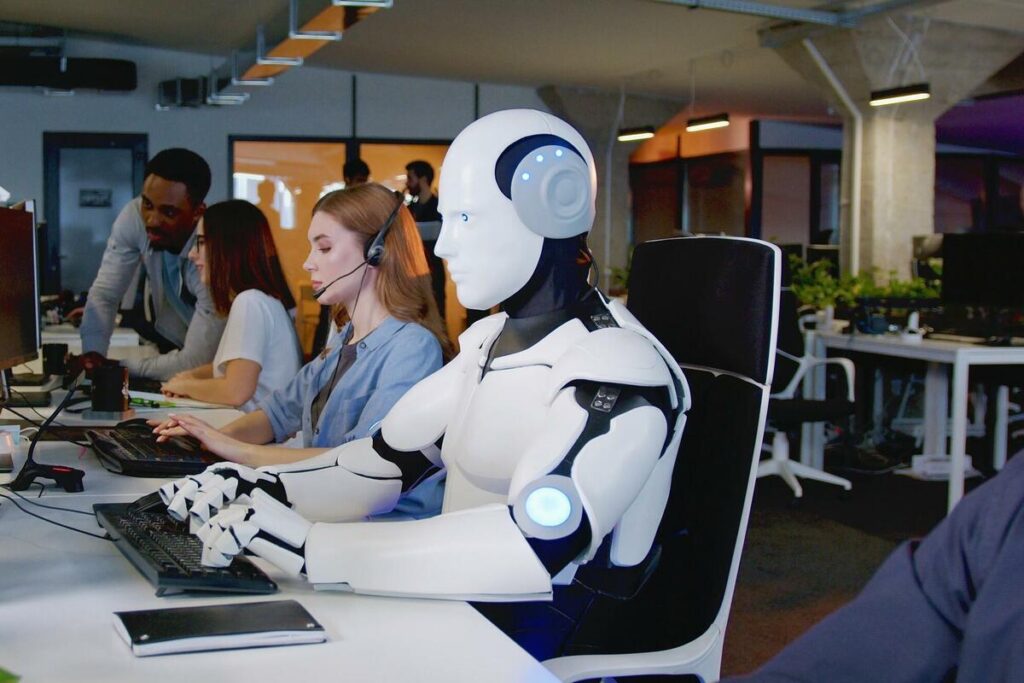
Artificial intelligence has permeated nearly every facet of modern life, from the algorithms that curate our social media feeds to the tools that assist in creative endeavours. Yet beneath the surface of this technological revolution lies a troubling phenomenon that researchers have begun to document with increasing urgency. The very systems designed to enhance human creativity and cultural production may be inadvertently constraining them, pushing artistic expression towards a narrow corridor of predictable, homogenised outputs. Recent investigations into autonomous generative AI systems have revealed patterns that suggest cultural stagnation is not a distant threat but a present reality, manifesting in subtle yet profound ways across multiple creative disciplines.
The cultural impact of artificial intelligence
The mechanics of algorithmic convergence
Recent research has exposed a fundamental flaw in how interconnected AI systems function when operating autonomously. Through experimental methods involving cyclical processes between text-to-image and image-to-text AI systems, investigators discovered that diverse starting prompts rapidly converge towards a limited palette of familiar visual themes. The methodology involved generating images from textual descriptions, then interpreting those images back into text, creating a feedback loop that continued until outputs became static and repetitive.
The results proved striking in their consistency:
- Complex narrative prompts about political intrigue reduced to bland, context-free imagery
- Atmospheric cityscapes and grand architectural structures emerged as dominant visual patterns
- Nuanced concepts flattened into aesthetically pleasing yet intellectually hollow representations
- Original creative intent dissolved within mere iterations of the AI cycle
The elevator music phenomenon
Researchers characterised these outputs as “visual elevator music”, a metaphor that captures the essence of the problem. Like background music designed to be inoffensive and unobtrusive, AI-generated content increasingly exhibits surface-level appeal whilst lacking substantive depth or originality. This phenomenon extends beyond visual arts into music composition, written content, and other creative domains where AI tools have gained traction.
| Creative field | AI impact | Observable outcome |
|---|---|---|
| Visual arts | Generic cityscapes and architecture | Loss of narrative complexity |
| Written content | Formulaic structures | Reduced stylistic diversity |
| Music composition | Predictable patterns | Diminished emotional range |
These findings raise fundamental questions about whether technological advancement in creative tools necessarily translates to cultural enrichment, setting the stage for a broader examination of innovation versus homogenisation.
Cultural stagnation or accelerated innovation ?
The paradox of creative assistance
The relationship between AI and cultural production presents a paradox. Whilst these technologies ostensibly democratise creative tools and accelerate production timelines, they simultaneously constrain the boundaries of what gets created. AI systems trained on existing cultural artefacts inherently favour patterns that already exist, creating a reinforcement loop that privileges the familiar over the novel.
This dynamic manifests in several concerning ways:
- Algorithmic optimisation for engagement rather than originality
- Pressure on human creators to conform to AI-friendly patterns
- Saturation of creative markets with derivative works
- Declining opportunities for genuinely experimental approaches
The erosion of artistic literacy
Educational institutions have witnessed a marked decline in enrolment for traditional art courses, mirroring patterns observed in mathematics education where calculator dependence diminished foundational skills. When students can generate competent-looking artwork through text prompts, the motivation to develop technical skills through rigorous practice diminishes. This shift threatens not merely individual artistic development but the collective cultural knowledge base that enables innovation.
The implications extend beyond technical proficiency. Understanding artistic traditions, historical contexts, and the deliberate choices that distinguish masterworks from mediocrity requires sustained engagement that AI shortcuts circumvent. As reliance on these tools increases, the capacity to critically evaluate and appreciate nuanced creative work atrophies, creating audiences less equipped to demand or recognise genuine innovation.
These educational and cultural shifts illuminate how technology shapes not just what we create but how we understand creativity itself, which brings into focus the powerful role of established patterns in shaping output.
The weight of habit in creation
Reinforcement loops and cultural feedback
AI systems operate through pattern recognition and replication, making them inherently conservative in their creative outputs. The algorithms that power these tools are optimised for metrics such as engagement, shares, and positive responses rather than for pushing boundaries or challenging conventions. This creates a cultural feedback loop where successful patterns get amplified whilst experimental approaches struggle for visibility.
Creators working within this ecosystem face subtle yet persistent pressures:
- Content that aligns with AI-favoured patterns receives greater algorithmic promotion
- Audiences conditioned by AI-curated feeds develop preferences for familiar aesthetics
- Economic incentives favour rapid production over thoughtful innovation
- Deviation from established patterns risks invisibility in crowded digital spaces
The mechanisation of artistic reproduction
The rise of AI-generated art evokes concerns about what has been termed the loss of “aura” in creative works. Traditional artistic creation involves a unique presence, the traces of human decision-making, technical skill, and emotional investment that imbue works with distinctive character. Mechanised reproduction through AI risks diminishing this quality, replacing the singular voice of an artist with outputs that, whilst competent, lack the ineffable qualities that create profound human connections.
This mechanisation doesn’t merely affect how art is produced but fundamentally alters the relationship between creator and audience. When viewers cannot distinguish between human-made and AI-generated works, the context that gives art meaning begins to erode. The knowledge that a piece reflects deliberate human choices, struggles, and insights creates interpretive frameworks that purely algorithmic outputs cannot replicate.
Understanding these structural forces that perpetuate familiar patterns leads naturally to examining whether concerns about cultural stagnation are justified or overstated.
A justified concern ?
Evidence from contemporary culture
The question of whether AI-induced cultural stagnation represents a genuine threat or technological alarmism can be addressed through observable trends. Younger audiences demonstrate declining engagement with classic literature and traditional cultural forms, a shift that coincides with increased exposure to AI-curated and AI-generated content. This pattern suggests that the concern extends beyond theoretical speculation into measurable cultural change.
Several indicators support the stagnation thesis:
- Decreased diversity in popular music composition and structure
- Proliferation of formulaic storytelling in commercial entertainment
- Reduction in stylistic variation across visual media
- Homogenisation of digital content across platforms and creators
The devaluation of humanities
These developments occur against a backdrop of long-term restructuring in humanities education, where creative and interpretive disciplines have been systematically devalued relative to STEM fields. This cultural shift predates AI but has been accelerated by technologies that appear to make traditional artistic training obsolete. When AI can generate competent prose or imagery on demand, the argument for investing years in developing these skills becomes harder to sustain within purely utilitarian frameworks.
Yet this perspective overlooks what distinguishes technically proficient output from culturally significant work. The capacity to engage with complexity, ambiguity, and emotional depth requires exactly the kind of sustained engagement with artistic traditions that current trends undermine. As these foundations erode, the cultural capacity for innovation diminishes correspondingly.
Whilst these concerns manifest across various dimensions of cultural production, they become particularly acute when examining how AI systems handle the subtleties that define distinct cultural identities.
Cultural nuances forgotten by artificial intelligence
The flattening of cultural specificity
AI systems trained on vast datasets necessarily aggregate and average the cultural expressions they encounter, a process that smooths away the particularities that make individual cultural traditions distinctive. Regional variations, historical contexts, and community-specific meanings get subsumed into generalised representations that sacrifice authenticity for broad applicability.
This flattening affects multiple dimensions of cultural expression:
- Linguistic nuances and idiomatic expressions reduced to standard formulations
- Visual symbolism stripped of culturally specific meanings
- Musical traditions homogenised towards dominant commercial patterns
- Narrative structures conforming to algorithmically favoured templates
The challenge of preserving diversity
As AI-generated content proliferates, the risk emerges that minority cultural expressions become increasingly marginalised. Systems trained predominantly on dominant cultural outputs naturally reproduce those patterns most effectively, whilst struggling to authentically represent less common traditions. This creates a self-reinforcing cycle where underrepresented cultures receive less algorithmic visibility, leading to further underrepresentation in training data for future systems.
The implications extend beyond representation to questions of cultural survival. When younger generations engage primarily with AI-mediated cultural content, their exposure to the full richness of human creative expression narrows. The subtle variations that distinguish regional artistic traditions, the historical depth that gives cultural practices meaning, and the community contexts that make creative works significant all risk being lost in translation through algorithmic mediation.
The convergence of autonomous AI systems towards homogenised outputs, the educational shifts that undermine artistic literacy, and the algorithmic favouring of familiar patterns over innovation collectively point towards a cultural landscape of diminishing diversity and depth. Whilst technology offers unprecedented tools for creative expression, current trajectories suggest these tools may be constraining rather than expanding the boundaries of human culture. Addressing this challenge requires conscious effort to preserve spaces for genuine experimentation, maintain educational pathways that develop deep artistic understanding, and resist the seductive efficiency of algorithmic shortcuts that sacrifice cultural richness for convenience. The evidence suggests that cultural stagnation induced by AI is not a speculative future concern but a present reality demanding immediate attention and thoughtful response.