



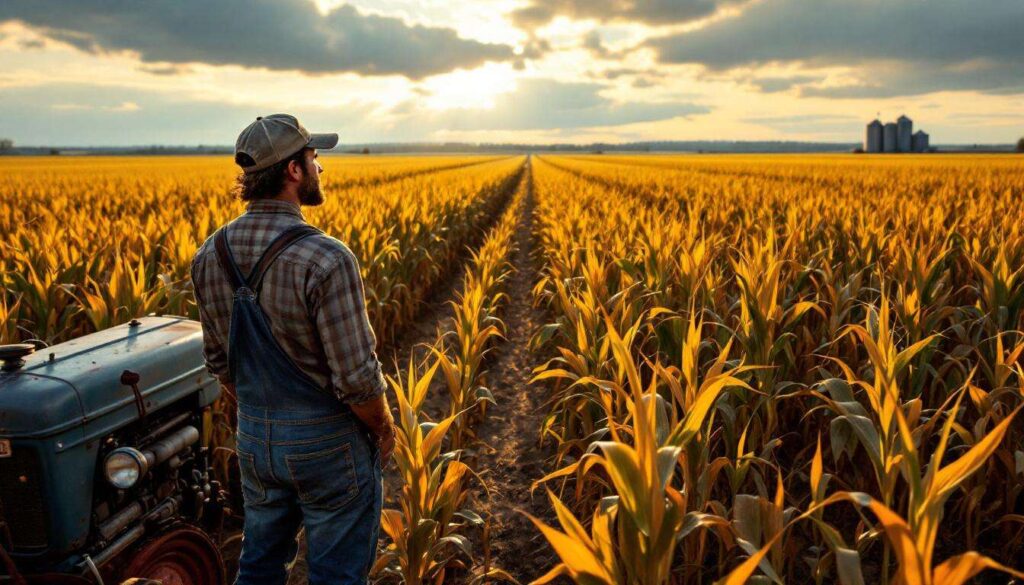
American farmers stand at a crossroads. For decades, they supplied grain to war-torn nations, fed allies during global conflicts, and maintained a position as the world’s agricultural powerhouse. Today, this legacy confronts unprecedented challenges as federal support programmes diminish and global markets become increasingly unpredictable. The agricultural sector, once cushioned by government subsidies and international agreements, now navigates a landscape marked by policy reversals and economic uncertainty.
The decline of federal support for American farmers
Historical foundations of agricultural assistance
The relationship between American farmers and federal support has deep historical roots stretching back to the Second World War. Government intervention became a cornerstone of agricultural policy, with taxpayer funds purchasing crops to support allies through initiatives like the Marshall Plan and the Food for Peace programme. These mechanisms provided predictable markets and stable income streams for farming communities across the nation.
Throughout the Cold War era, federal backing extended beyond simple subsidies. The government established comprehensive safety nets including:
- Price support programmes guaranteeing minimum crop values
- Crop insurance schemes protecting against natural disasters
- Direct payment systems compensating for market fluctuations
- Export promotion initiatives expanding international markets
The erosion of traditional support structures
Since the collapse of the Soviet Union, federal agricultural policy has undergone fundamental transformation. The shift accelerated during the Trump administration, which marked a departure from 85 years of established practice. Subsidies that once provided financial cushioning have been reduced, whilst safety nets protecting farmers from market volatility have weakened considerably.
The consequences of this policy shift manifest in tangible ways. Farmers who previously relied on government programmes to weather economic downturns now face increased financial vulnerability. Many operations, particularly smaller family farms, struggle to maintain profitability without the traditional federal backing that sustained previous generations.
This changing federal landscape creates particular difficulties for agricultural planning. Without guaranteed support mechanisms, farmers must absorb greater financial risks when making investment decisions about equipment, land, and crop selection. The uncertainty surrounding future policy directions further complicates long-term strategic planning.
The challenges of an unstable global market for farmers
Price volatility and market unpredictability
Global agricultural markets have become increasingly volatile, creating significant challenges for American producers. Price fluctuations for crops and livestock occur with greater frequency and magnitude, making income projections nearly impossible. Farmers who plant crops based on current market conditions may face dramatically different prices at harvest time, potentially resulting in substantial financial losses.
| Market Factor | Impact on Farmers |
|---|---|
| Currency fluctuations | Affects export competitiveness and profit margins |
| International demand shifts | Creates unpredictable market access |
| Supply chain disruptions | Increases costs and delays deliveries |
| Trade policy changes | Alters market opportunities suddenly |
Competition from international producers
American farmers face intensifying competition from agricultural producers worldwide. Nations with lower production costs, different regulatory environments, or favourable trade agreements challenge the traditional dominance of American agriculture in global markets. This competition pressures profit margins and forces domestic producers to continually improve efficiency.
The competitive landscape extends beyond simple price comparisons. International producers benefit from various advantages including subsidised inputs, less stringent environmental regulations, and targeted government support programmes that American farmers no longer enjoy to the same extent.
The evolving role of American farmers in the global economy
Shifting from dominance to adaptation
The position of American agriculture within the global economy has fundamentally transformed. Where once American farmers supplied essential food aid and dominated export markets, they now compete in a multipolar agricultural landscape. This shift requires new approaches to production, marketing, and international engagement.
Modern American farmers must consider factors their predecessors rarely encountered:
- Rapidly changing consumer preferences in international markets
- Environmental and sustainability standards varying by region
- Technology adoption rates affecting competitive positioning
- Geopolitical tensions influencing trade relationships
The labour dimension of agricultural production
Labour shortages continue to plague American agriculture, a challenge with historical precedents. Guest-worker programmes established during previous decades sourced labour predominantly from Mexico and the Caribbean, ensuring consistent production capacity. However, contemporary immigration policies and changing demographics have complicated labour availability, forcing farmers to navigate workforce challenges whilst maintaining productivity.
These labour difficulties intersect with technological advancement and automation possibilities, creating complex decisions about investment priorities and operational strategies. Farmers must balance immediate labour needs against long-term capital investments in mechanisation.
Impact of international policies on American agriculture
Trade agreement reversals and renegotiations
International trade policy has become a critical determinant of agricultural profitability. The Trump administration’s approach to trade agreements disrupted established relationships and created uncertainty in export markets. Tariffs, retaliatory measures, and renegotiated terms altered market access conditions, forcing farmers to adapt quickly to changing international landscapes.
The consequences of these policy shifts extend beyond immediate market access. Long-term relationships with international buyers were strained, potentially creating lasting competitive disadvantages as foreign purchasers sought more reliable suppliers from other nations.
Foreign assistance programme modifications
Changes to foreign food assistance programmes have reduced traditional outlets for American agricultural products. Programmes that once purchased American crops for international aid now face budget constraints and policy redirections, eliminating predictable demand sources that farmers previously incorporated into production planning.
Adaptation strategies of farmers facing new realities
Diversification and risk management
American farmers are developing innovative strategies to navigate uncertain conditions. Diversification across crop types, production methods, and market channels helps spread risk. Many operations now incorporate direct-to-consumer sales, value-added products, and niche market positioning to reduce dependence on volatile commodity markets.
Financial management has become increasingly sophisticated, with farmers utilising:
- Futures contracts and hedging strategies to lock in prices
- Crop insurance products protecting against yield losses
- Alternative revenue streams including agritourism
- Cooperative marketing arrangements improving negotiating power
Technology adoption and efficiency improvements
Technological advancement offers pathways to maintain competitiveness despite reduced federal support. Precision agriculture techniques, data analytics, and automation help farmers maximise productivity whilst minimising input costs. However, these technologies require substantial capital investment, creating barriers for smaller operations.
The future of American agriculture in an uncertain context
Structural changes and consolidation pressures
The combination of market volatility and reduced federal support accelerates structural transformation within American agriculture. Smaller operations struggle to achieve the economies of scale necessary for profitability, whilst larger corporate farms possess resources to weather uncertainty. This dynamic drives consolidation, fundamentally altering the character of American farming.
Policy questions and potential directions
The agricultural sector’s future depends partly on policy decisions yet to be made. Questions surrounding federal support levels, trade agreement priorities, and rural development investment remain unresolved. The balance between market-oriented approaches and protective interventions will shape opportunities available to American farmers in coming years.
American agriculture faces a period of profound uncertainty. The sector that once confidently fed allies and dominated global markets now confronts diminished federal backing and volatile international conditions. Farmers demonstrate remarkable resilience through adaptation strategies, technological adoption, and diversification efforts. However, the fundamental challenges of reduced government support and unpredictable markets persist. The agricultural landscape continues evolving, requiring farmers, policymakers, and communities to navigate complex economic realities whilst preserving the productive capacity that remains essential to both domestic food security and international trade relationships.