

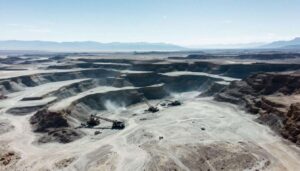


The diamond industry has witnessed a significant development with the announcement of a substantial find in northeastern Angola. After three decades without major discoveries, the De Beers Group, working alongside Endiama, has identified a new kimberlite field that could reshape the landscape of African diamond production. This breakthrough represents not only a technical achievement but also a strategic milestone for both the mining giant and the host nation, potentially unlocking considerable economic value whilst addressing the growing challenge of securing new diamond sources in an industry facing supply constraints.
Discovery of a new kimberlite field in Angola
Initial breakthrough and geological significance
The discovery process began with aerial surveys conducted in March 2025, which identified several priority targets for ground investigation. By July 2025, drilling operations confirmed the presence of kimberlite in the first drill hole, validating the exploration strategy and indicating a potentially significant magmatic system. This initial success marked a crucial turning point after decades of limited exploration activity in the region.
The kimberlite field is located in northeastern Angola, an area long recognised for its diamond potential but previously underexplored. The geological characteristics of this region suggest favourable conditions for diamond formation, with volcanic structures that have transported these precious stones from considerable depths beneath the Earth’s surface.
Technical evaluation and next steps
Following the initial discovery, a comprehensive evaluation programme has been initiated to assess the commercial viability of the deposit. This involves several critical stages:
- detailed geological mapping of the kimberlite structure
- ground geophysical analyses to determine the extent of the deposit
- systematic sample collection across the site
- laboratory examination to recover microdiamonds
- classification of kimberlite type to guide future drilling
These microdiamond samples serve as essential indicators for estimating the potential yield of larger-scale operations, providing crucial data for investment decisions and development planning.
The methodical approach to evaluating this discovery reflects the complexity of modern diamond exploration, where substantial investment must be justified through rigorous scientific analysis before proceeding to full-scale mining operations.
A strategic partnership between De Beers and the Angolan government
Foundations of collaboration
The discovery stems from a strengthened partnership between De Beers and Angola’s national diamond company, Endiama. This collaboration was formalised through mining contracts signed in April 2022, establishing the legal framework for joint exploration activities. A subsequent memorandum of understanding in February 2024 further solidified the relationship, outlining shared objectives for responsible resource exploitation and long-term cooperation.
Mutual benefits and commitments
The partnership structure ensures that both parties benefit from the discovery. For Angola, the arrangement provides:
- access to De Beers’ technical expertise and exploration technology
- potential revenue streams from diamond production
- employment opportunities for local communities
- infrastructure development in remote regions
- enhanced position in the global diamond market
For De Beers, the partnership offers access to promising geological territory and the support of the Angolan government in navigating regulatory requirements and establishing operational infrastructure. The company’s leadership has expressed confidence in Angola’s potential as a significant diamond exploration destination, acknowledging the government’s commitment to creating favourable conditions for mining investment.
This collaborative framework demonstrates how international mining companies and host nations can work together to unlock natural resources whilst ensuring local interests are protected and benefits are shared equitably.
The importance of kimberlite in the diamond industry
Geological formation and characteristics
Kimberlites are volcanic rocks that play an indispensable role in bringing diamonds from the Earth’s mantle to accessible depths. These formations originate from depths reaching up to 300 kilometres below the surface, where extreme pressure and temperature conditions enable diamond crystallisation. Powerful volcanic eruptions then transport these precious stones upwards through vertical pipes, creating the kimberlite structures that miners seek.
Economic significance and yield considerations
Not all kimberlites contain economically viable diamond concentrations. The median yield of kimberlite deposits globally is approximately 0.25 carats per tonne, though this figure varies considerably depending on geological conditions and diamond quality. This relatively low concentration underscores the importance of thorough exploration and evaluation before committing to large-scale mining operations.
| Factor | Significance |
|---|---|
| Depth of origin | Up to 300 kilometres below surface |
| Typical yield | Approximately 0.25 carats per tonne |
| Diamond quality | Varies significantly within deposits |
| Exploration period | Several years from discovery to production |
The quality of diamonds recovered from kimberlites varies substantially, with some deposits yielding predominantly industrial-grade stones whilst others produce gem-quality diamonds suitable for jewellery. This variability makes each discovery unique and requires detailed assessment to determine commercial potential.
Understanding kimberlite geology remains central to diamond exploration strategy, as these formations represent the primary source of natural diamonds and continue to drive exploration efforts across diamond-producing regions worldwide.
Potential for supply and local communities
Addressing supply challenges
The diamond industry faces growing supply constraints as existing mines mature and few major new deposits have been discovered in recent decades. This Angolan discovery could help address these challenges by potentially adding significant production capacity to global supply. The timing is particularly relevant given increasing demand for natural diamonds and the industry’s need to secure long-term sources.
Local economic impact
Beyond global supply considerations, the development of this kimberlite field offers substantial opportunities for local communities in northeastern Angola. Mining operations typically generate employment across multiple skill levels and stimulate economic activity in surrounding areas through:
- direct employment in mining operations
- support services and supply chain opportunities
- infrastructure improvements including roads and utilities
- skills development and training programmes
- revenue for local and national government
The partnership structure between De Beers and Endiama is designed to ensure that benefits flow to Angolan stakeholders, with provisions for responsible resource management and community development initiatives. This approach reflects evolving industry standards that emphasise sustainable mining practices and meaningful engagement with affected communities.
The successful development of this deposit could serve as a model for future mining projects in Angola, demonstrating how international expertise can be combined with local knowledge and government support to create shared value.
Return of deep exploration in the region
Historical context and renewed focus
The discovery marks the end of a 30-year period without major new finds by De Beers, highlighting both the challenges of diamond exploration and the significance of this breakthrough. During this extended hiatus, the company maintained exploration activities but faced difficulties in identifying commercially viable deposits, reflecting broader industry trends of declining discovery rates.
Advanced exploration techniques
Modern exploration methods have evolved considerably, incorporating sophisticated technologies that improve the likelihood of successful discoveries. The Angolan project utilised aerial surveys to identify prospective targets before committing to expensive drilling programmes, demonstrating how technological advances can enhance exploration efficiency.
Key techniques employed in contemporary diamond exploration include:
- airborne geophysical surveys to detect magnetic anomalies
- satellite imagery analysis for geological mapping
- ground-based geochemical sampling
- advanced drilling technologies for deeper penetration
- laboratory analysis of indicator minerals
These methods enable exploration teams to assess vast territories more quickly and cost-effectively than traditional approaches, though substantial investment remains necessary to progress from initial targets to confirmed deposits. The success in Angola validates this systematic approach and may encourage renewed exploration investment in other underexplored regions with similar geological potential.
Prospects for the diamond industry in Angola
Strengthening market position
Angola has long been a significant diamond producer, but this discovery could substantially enhance the nation’s position in global markets. If the kimberlite field proves commercially viable, it could attract additional exploration investment and position Angola as a increasingly important source of natural diamonds alongside established producers.
Long-term industry implications
The development timeline for diamond mines typically spans several years from discovery to production, requiring patient capital and sustained commitment. For Angola, this means the full economic benefits will materialise gradually, but the long-term prospects appear promising given the geological potential demonstrated by initial findings.
The discovery also reinforces Angola’s attractiveness as an exploration destination, potentially encouraging other mining companies to increase their activities in the country. This could lead to additional discoveries and further strengthen the nation’s mining sector, contributing to economic diversification and development objectives.
For the broader diamond industry, the Angolan find provides reassurance that significant new sources can still be discovered through systematic exploration, offering hope for supply security in coming decades as existing mines deplete.
The announcement of this new kimberlite field in northeastern Angola represents a watershed moment for both De Beers and the host nation. After three decades without major discoveries, the find demonstrates that patient exploration combined with strategic partnerships can yield significant results. The collaboration between De Beers and Endiama, supported by favourable government policies, has created conditions for successful exploration and potential development. Kimberlites remain central to diamond supply, and this discovery could help address growing constraints whilst delivering economic benefits to local communities. As evaluation work continues, the full potential of this deposit will become clearer, but the initial findings suggest Angola may play an increasingly important role in global diamond production for years to come.