



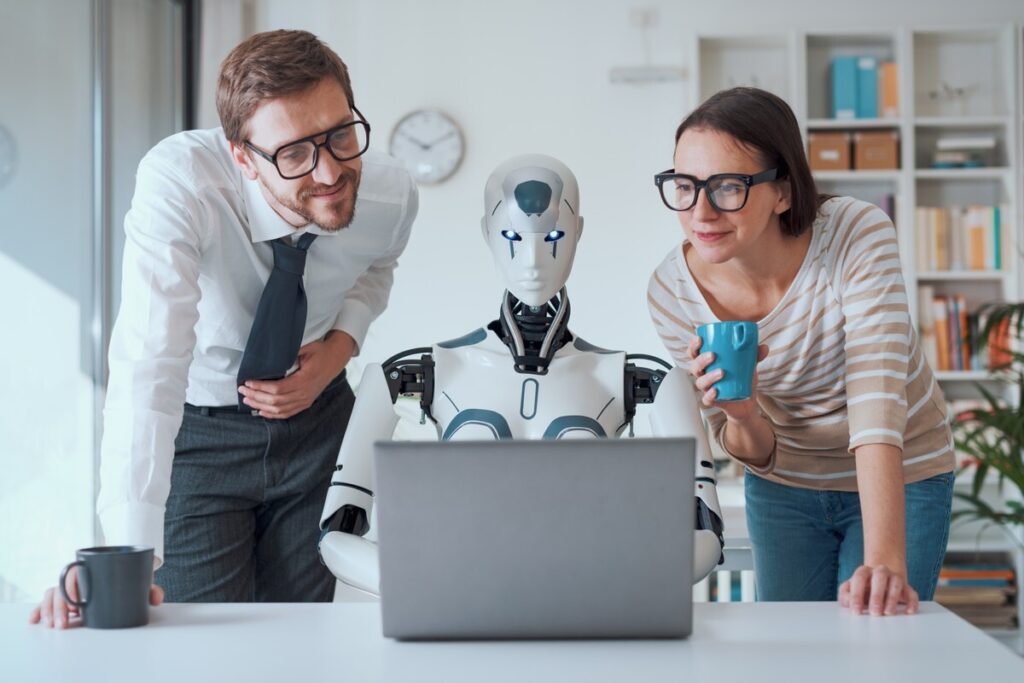
Artificial intelligence has become one of the most discussed topics in modern workplaces, sparking both excitement and apprehension among employees and employers alike. While headlines frequently warn of job losses and automation threats, the reality emerging from organisations successfully implementing AI tells a different story. Rather than eliminating human workers, AI is fundamentally reshaping what makes individuals valuable in their roles, creating opportunities for those who adapt whilst challenging traditional notions of workplace contribution.
The impact of AI on the evolution of skills at work
Shifting from routine to strategic capabilities
The integration of artificial intelligence into workplace environments has accelerated a transformation in which skills employers value most. Tasks involving repetitive data entry, basic analysis, and routine decision-making are increasingly handled by AI systems, freeing human workers to focus on higher-order thinking. This shift demands that employees develop capabilities in critical thinking, complex problem-solving, and strategic planning.
Research demonstrates that organisations implementing AI successfully prioritise reskilling programmes that emphasise:
- analytical thinking and innovation
- active learning and learning strategies
- creativity and originality
- technology design and programming
- emotional intelligence and persuasion
The emergence of hybrid skill sets
The most sought-after professionals are those who combine technical literacy with distinctly human capabilities. Understanding how AI systems function, interpreting their outputs, and knowing when to override algorithmic recommendations has become essential. Employees who can bridge the gap between machine efficiency and human judgement position themselves as indispensable assets within their organisations.
| Traditional skill priority | Emerging skill priority |
|---|---|
| Manual data processing | Data interpretation and storytelling |
| Routine customer service | Complex relationship management |
| Standardised reporting | Strategic insight generation |
| Process execution | Process innovation and design |
This evolution in workplace skills reflects a broader recognition that whilst AI excels at processing information, humans remain superior at contextualising it within organisational goals and ethical frameworks.
Human skills irreplaceable by artificial intelligence
Emotional intelligence and empathy
Despite remarkable advances in natural language processing, artificial intelligence fundamentally lacks the capacity for genuine empathy and emotional understanding. Human workers excel in situations requiring nuanced emotional responses, conflict resolution, and building trust-based relationships. These capabilities prove particularly valuable in sectors such as healthcare, education, and customer relations where human connection drives outcomes.
Professionals who develop strong emotional intelligence can navigate complex interpersonal dynamics that AI cannot comprehend, making them invaluable in leadership roles and client-facing positions.
Creative and innovative thinking
Whilst AI can generate content based on patterns in existing data, true creativity remains a distinctly human trait. The ability to imagine entirely new concepts, challenge established norms, and synthesise disparate ideas into innovative solutions continues to differentiate human workers from algorithmic systems.
Key creative capabilities that resist automation include:
- conceptualising novel products or services
- developing original marketing strategies
- creating artistic works with cultural resonance
- designing user experiences that anticipate unstated needs
- formulating breakthrough business models
Ethical judgement and accountability
Complex decisions involving ethical considerations, moral implications, and societal impact require human oversight. AI systems operate within parameters defined by their programming and training data, lacking the capacity for moral reasoning or understanding broader consequences. Professionals who can navigate ethical dilemmas and accept accountability for decisions maintain irreplaceable value in organisations increasingly scrutinised for their social responsibility.
These uniquely human attributes form the foundation upon which effective collaboration with AI technologies must be built.
The future of work: human-machine collaboration
Augmentation rather than replacement
Forward-thinking organisations are adopting an augmentation model where AI enhances human capabilities rather than substituting for them. This approach recognises that optimal outcomes emerge when human creativity, judgement, and emotional intelligence combine with AI’s processing power, consistency, and analytical capabilities.
Successful human-machine collaboration typically involves humans focusing on:
- defining objectives and success criteria
- interpreting AI-generated insights within organisational context
- making final decisions on recommendations
- handling exceptions and edge cases
- maintaining ethical oversight
Redesigning workflows for optimal partnership
Organisations achieving the greatest benefits from AI investment are those that fundamentally redesign workflows to capitalise on the strengths of both humans and machines. Rather than simply automating existing processes, they reimagine how work should be performed when AI capabilities are available.
| Task type | AI contribution | Human contribution |
|---|---|---|
| Customer enquiries | Initial response and information retrieval | Complex problem-solving and relationship building |
| Financial analysis | Data processing and pattern identification | Strategic interpretation and recommendation |
| Content creation | Research and draft generation | Creative direction and quality assurance |
This collaborative model enables organisations to achieve levels of productivity and innovation unattainable through either human effort or AI implementation alone, setting the stage for necessary preparation strategies.
How to prepare for a work environment dominated by AI
Continuous learning and adaptability
Professionals must embrace lifelong learning as AI technologies evolve rapidly and reshape workplace requirements. Developing comfort with ambiguity and willingness to acquire new skills regularly has become essential for career longevity. Organisations supporting this transition provide access to training resources, encourage experimentation, and reward adaptability.
Building AI literacy
Understanding the fundamentals of how artificial intelligence systems function empowers workers to collaborate effectively with these technologies. This does not require becoming a data scientist, but rather developing sufficient knowledge to:
- recognise appropriate applications for AI tools
- interpret outputs critically
- identify potential biases or limitations
- communicate effectively with technical specialists
- contribute to implementation decisions
Cultivating uniquely human strengths
Investing in capabilities that differentiate humans from machines provides the most sustainable career protection. This includes developing emotional intelligence, creative thinking, ethical reasoning, and interpersonal skills that remain beyond AI’s reach. Professionals who excel in these areas position themselves as essential contributors regardless of technological advancement.
These preparation strategies enable individuals to thrive as organisations fundamentally reconsider what constitutes workplace efficiency.
Reframing efficiency through artificial intelligence
Beyond speed to strategic value
Traditional definitions of workplace efficiency focused primarily on speed and volume of output. AI’s ability to process information and complete routine tasks far exceeds human capacity in these dimensions. However, this shift compels organisations to reframe efficiency in terms of strategic impact rather than mere productivity metrics.
The new efficiency paradigm values:
- quality of insights generated from data
- innovation and competitive differentiation
- customer satisfaction and loyalty
- ethical decision-making and risk mitigation
- organisational learning and adaptation
Measuring human contribution differently
As AI handles quantifiable tasks, organisations must develop new frameworks for assessing human contribution. Metrics focusing solely on output volume become inadequate when evaluating roles centred on creativity, relationship management, or strategic thinking. Progressive organisations implement assessment approaches that recognise the value of collaboration, innovation, and judgement.
| Traditional metric | AI-era metric |
|---|---|
| Number of reports generated | Strategic impact of insights provided |
| Customer interactions handled | Customer satisfaction and retention rates |
| Hours worked | Problems solved and innovations introduced |
This reconceptualisation of efficiency creates space for understanding how AI transforms team dynamics and value creation.
Reinventing added value within teams with AI
Redistributing cognitive labour
AI implementation enables teams to redistribute cognitive work in ways that maximise human potential. When routine analysis, data gathering, and administrative tasks shift to AI systems, team members can dedicate mental energy to collaborative problem-solving, strategic planning, and innovation. This redistribution often reveals hidden talents and capabilities previously obscured by routine responsibilities.
Fostering collaborative intelligence
The most effective teams develop what researchers term collaborative intelligence: the synergistic combination of human and artificial capabilities that exceeds what either could achieve independently. This requires intentional cultivation of:
- trust in AI systems whilst maintaining critical oversight
- communication protocols for human-AI workflows
- shared understanding of when to rely on algorithms versus human judgement
- collective learning from both successes and AI-related failures
Creating new roles and specialisations
AI integration generates entirely new categories of work within teams. Roles such as AI trainers, algorithm auditors, and human-machine collaboration specialists emerge to bridge technological and human elements. These positions require unique combinations of technical understanding and interpersonal skills, offering career opportunities for those who develop relevant expertise.
Organisations that successfully reinvent team value propositions position themselves advantageously as workplace transformation accelerates.
The narrative surrounding artificial intelligence and employment has shifted from apocalyptic warnings to pragmatic recognition of transformation. Evidence demonstrates that AI redefines rather than eliminates human value at work, creating opportunities for those who adapt whilst rendering obsolete those who resist change. Success in this evolving landscape requires developing uniquely human capabilities, embracing continuous learning, and understanding how to collaborate effectively with intelligent systems. Organisations and individuals who recognise AI as a tool for augmentation rather than replacement will discover enhanced productivity, innovation, and job satisfaction. The future belongs not to those who compete with machines, but to those who leverage technology whilst contributing irreplaceable human insight, creativity, and judgement.