



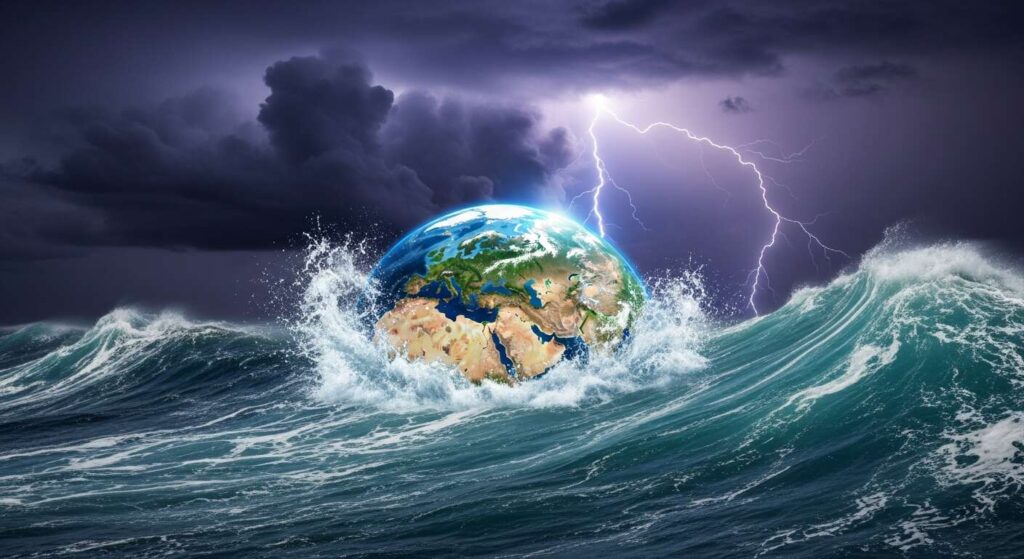
The global economy stands at a critical juncture. After centuries of increasing integration through trade and investment, the foundations of globalisation appear to be crumbling. What began as a powerful force driving unprecedented economic growth has now entered a phase of retreat, raising alarming questions about the stability of the international financial system. The withdrawal of the United States from its traditional leadership role compounds these concerns, creating a vacuum that no other nation seems capable of filling. As protectionist policies gain traction and economic fragmentation accelerates, the world faces the prospect of a financial crisis that could dwarf the catastrophic events of 2008.
The roots of globalisation and its initial impact
The historical foundations of economic integration
Globalisation emerged as a transformative force over four centuries, fundamentally reshaping how nations interact economically. The process accelerated during two distinct periods: the long 19th century, stretching from the French Revolution to the First World War, and the post-World War II era that continued until the 2008 financial crisis. During this extraordinary timeframe, the global economy expanded from USD 81.7 billion in 1650 to an astonishing USD 70.3 trillion in 2020, representing a multiplication of over 860 times.
The mechanisms driving international trade
Several key factors propelled this remarkable expansion:
- Technological innovations in transportation and communication
- Reduction of trade barriers and tariffs between nations
- Establishment of international financial institutions
- Standardisation of commercial practices and regulations
- Growth of multinational corporations spanning continents
These developments created an interconnected web of economic relationships that bound nations together in unprecedented ways. The free movement of goods, capital, and services became the hallmark of modern economies, with international trade volumes reaching levels that previous generations could scarcely have imagined.
However, this expansion came with significant disparities. The benefits of globalisation were not distributed equally, setting the stage for growing tensions that would eventually challenge the entire system.
Turning point: the declining American influence
The traditional role of American leadership
Since the end of World War II, the United States has served as the principal architect and guarantor of the global economic order. Through institutions such as the World Bank and the International Monetary Fund, American influence shaped trade policies, financial regulations, and development strategies worldwide. This leadership provided stability and predictability to international markets, even as critics argued that the system disproportionately favoured American interests.
The shift towards protectionism
Recent developments have marked a fundamental departure from this established order. Protectionist trade policies have gained political traction, reversing decades of commitment to free trade principles. This retreat manifests in several ways:
- Imposition of tariffs on imports from traditional trading partners
- Withdrawal from multilateral trade agreements
- Emphasis on bilateral rather than global economic frameworks
- Prioritisation of domestic manufacturing over international supply chains
- Reduced engagement with international economic institutions
Consequences for global stability
The implications of this American withdrawal extend far beyond trade statistics. Without a dominant power willing to maintain the infrastructure of globalisation, the international system faces unprecedented fragility. Markets that once relied on American intervention during crises now confront the possibility of navigating turbulent waters without a stabilising force.
This vacuum creates particular dangers as economic interdependence has actually increased, even as political commitment to cooperation has waned.
Global financial chaos: anticipating the worst without the United States
The 2008 crisis as a reference point
The 2008 financial crisis demonstrated both the vulnerability of interconnected markets and the critical importance of coordinated international responses. American leadership proved essential in preventing a complete collapse of the global financial system. Central banks coordinated monetary policies, governments implemented stimulus measures, and regulatory frameworks were strengthened through international cooperation.
A more dangerous landscape today
The current environment presents several factors that could make a future crisis significantly worse:
| Factor | 2008 Crisis | Current Situation |
|---|---|---|
| US Leadership | Active and engaged | Withdrawn and uncertain |
| International Cooperation | Strong coordination | Fragmented and weakened |
| Global Debt Levels | High but manageable | Significantly higher |
| Trade Integration | Increasing | Declining |
The amplification effect of interdependence
Paradoxically, whilst political will for cooperation has diminished, economic interdependence remains extraordinarily high. Supply chains span multiple continents, financial instruments link markets across time zones, and currency fluctuations ripple through economies instantaneously. This creates a situation where shocks can propagate rapidly through the system without effective mechanisms to contain them.
The question becomes not whether another crisis will occur, but what form it might take and how devastating its consequences could be.
The doomsday scenario: a collapse of the US bond market
The foundation of global finance
US Treasury bonds represent the bedrock of the international financial system. Considered the safest assets in the world, they serve as benchmarks for pricing risk, collateral for countless transactions, and reserves for central banks globally. The stability of this market underpins virtually every other financial market on the planet.
Potential triggers for collapse
Several developments could threaten this stability:
- Unsustainable fiscal deficits undermining confidence in US debt
- Political dysfunction preventing timely responses to crises
- Loss of the dollar’s status as the primary reserve currency
- Foreign governments reducing holdings of US Treasury securities
- Inflation eroding the real value of bond holdings
Cascading consequences
A collapse of the US bond market would trigger catastrophic chain reactions throughout the global economy. Interest rates would spike, credit markets would freeze, and asset values would plummet. Without American leadership to coordinate a response, each nation would likely prioritise its own survival, leading to competitive devaluations, trade restrictions, and financial protectionism that would deepen and prolong the crisis.
The resulting economic devastation could eclipse even the Great Depression in its severity and global reach.
Towards a new era: global economic uncertainties and challenges
The fragmentation of economic blocs
The international economy increasingly resembles a collection of competing regional systems rather than a unified global marketplace. Trade agreements are becoming more bilateral and exclusive, technology standards are diverging along geopolitical lines, and financial systems are developing parallel infrastructures that reduce interdependence.
Emerging challenges for developing nations
Developing countries face particularly acute difficulties in this environment. The criticisms of economists like Joseph Stiglitz regarding globalisation’s unequal benefits have proven prescient. These nations now confront:
- Reduced access to developed markets through protectionist barriers
- Pressure to align with competing economic blocs
- Limited ability to influence international economic rules
- Vulnerability to capital flight during periods of uncertainty
- Difficulty attracting investment without clear global frameworks
The search for new models
As the old order crumbles, nations and institutions are experimenting with alternative approaches to economic organisation. Regional integration projects gain momentum, digital currencies challenge traditional monetary systems, and new institutions emerge to facilitate cooperation outside existing frameworks. Whether these innovations can provide the stability and prosperity that globalisation once promised remains an open question.
The fundamental challenge lies in whether any alternative system can match the scale and effectiveness of American-led globalisation.
The impossible replacement: why no one can succeed the United States
The unique position of American power
The United States occupied a singular position in the global economy, combining military might, economic scale, technological innovation, and institutional credibility in ways that no other nation can replicate. This multifaceted dominance enabled it to establish and maintain the rules-based international order that facilitated globalisation.
Limitations of potential successors
Various candidates have been proposed as potential leaders of a new global order, but each faces insurmountable obstacles:
| Potential Leader | Strengths | Critical Weaknesses |
|---|---|---|
| China | Economic scale, manufacturing capacity | Authoritarian governance, lack of international trust |
| European Union | Economic size, regulatory expertise | Political fragmentation, limited military power |
| Multilateral institutions | Legitimacy, global representation | Lack of enforcement mechanisms, bureaucratic inertia |
The reality of a leaderless world
The most likely scenario involves not a replacement of American leadership but rather its absence. A multipolar world without a dominant power lacks the coordination mechanisms necessary to manage global challenges effectively. Financial crises, climate change, pandemics, and other transnational threats require collective action that becomes increasingly difficult without a nation willing and able to bear the costs of leadership.
The world economy has grown accustomed to operating within frameworks that American power sustained. Adapting to a reality without that foundation represents the central challenge of the coming decades, with the stability of the entire system hanging in the balance.
The trajectory of globalisation over four centuries has brought extraordinary economic growth and interconnection, yet the system now confronts existential threats. American withdrawal from leadership, combined with rising protectionism and economic fragmentation, creates conditions for a financial crisis potentially far worse than 2008. The absence of any credible successor to American dominance leaves the world vulnerable to shocks that could cascade through interconnected markets without effective coordination mechanisms. As nations navigate this uncertain terrain, the need for inclusive policies and cooperative frameworks becomes ever more urgent, even as political will for such collaboration diminishes. The coming years will determine whether the global economy can adapt to this new reality or whether the retreat from globalisation precipitates the very catastrophe that international cooperation was designed to prevent.